An insurer’s starting assumption that a motorcyclist was reckless is a negotiating position, not a finding of fault. Texas assigns a percentage of responsibility to each person whose conduct contributed to a crash, bars recovery only when a claimant is more than 50 percent responsible, and otherwise reduces damages by that share. The rules below show which questions actually decide a rider’s claim.
The short version
- Bias is an argument, not a finding. Texas sends the percentage of responsibility to the trier of fact, who sets it for each person whose conduct contributed to the harm (Civil Practice and Remedies Code § 33.003).
- The 50 percent line matters most. A claimant whose share is above 50 percent recovers nothing; a smaller share reduces the recovery by that percentage (§§ 33.001 and 33.012).
- A rider has the full use of a lane. The Transportation Code keeps a car from taking that use away, and it also bars a rider from moving between lanes of same-direction traffic (§ 545.0605).
- The helmet statute is an offense rule with exceptions. It does not, by its own terms, decide who caused a crash (§ 661.003).
- The state’s own numbers show the scale. TxDOT said in May 2024 that nearly 600 riders were killed in crashes in 2023, and that more than a third of motorcycle fatalities happen at roadway intersections.
Why do insurers assume a motorcyclist was reckless?
Insurers often start from the motorcycle rather than from what each driver did, and that starting point can lower an offer before any evidence is in. Texas law does not let the assumption stand in for the facts: the percentage of responsibility is set for each person whose conduct caused or contributed to the harm.
Under § 33.003(a) of the Civil Practice and Remedies Code, the trier of fact sets each person’s percentage by looking at that person’s own causing or contributing conduct. The list of persons in that subsection covers claimants, defendants, settling persons and designated responsible third parties, and the statute does not mention what kind of vehicle anyone was using. An insurer that says the rider was the cause is making a claim about conduct at the intersection or in the lane, and that claim has to be tested against what happened.
Where do motorcycle crashes happen in Texas?
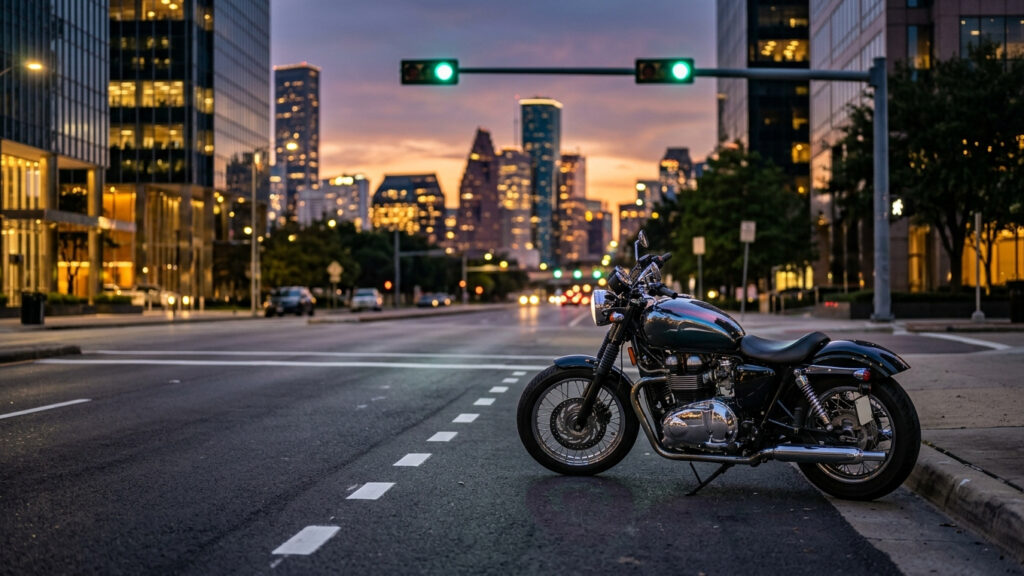
A large share of them happen at intersections. TxDOT said in May 2024 that more than a third of motorcycle fatalities happen at roadway intersections, and that intersection fatal crashes rose 21 percent in 2023.
The Texas Department of Transportation’s May 2024 release reported that the number of motorcyclists killed in 2023 rose 7 percent from the year before, and that “nearly 600 people riding motorcycles were killed in crashes in Texas last year” (TxDOT newsroom, May 2024, covering 2023). Those are statewide figures for every rider. They show where the danger concentrates; they do not say who was at fault in any one crash, so they cannot decide a Houston claim on their own.
Houston crashes follow the same pattern. On October 8, 2026, Fox 26 reported that a motorcyclist was killed at about 11 p.m. on West Montgomery Road near North Victory Drive after a westbound Toyota Camry seemed to have made a left turn and struck him, according to a Houston police sergeant. The article’s central point is the one that matters for a claim: “Police are still working to officially determine who was at fault in the crash” (Fox 26 Houston, October 2026). Our article on the common causes of motorcycle accidents covers the speeding, lane-splitting and distraction patterns insurers tend to raise, and the Houston motorcycle accident lawyer page describes how a case starts. Riders on Houston car accident claims face the same fault arithmetic. For the Houston intersections where crashes pile up, see our article on the roads and intersections with the most crashes.
How does proportionate responsibility cut a rider’s claim?
It works in two steps. Above 50 percent, a claimant recovers nothing. At or below 50 percent, the recovery is reduced by the claimant’s own percentage, so an insurer that moves that number even a little is changing what the claim is worth.
Section 33.001 bars recovery when the claimant’s percentage of responsibility is greater than 50 percent. Section 33.012(a) then requires the court to cut the damages by the claimant’s percentage. As a hypothetical, if a jury found a rider 20 percent responsible for a $100,000 loss, the statute would reduce the recovery to $80,000 before any other adjustment. That arithmetic is why the bias argument is worth so much to an insurer.
How the percentages get proved is where most of the work happens. Our article on how personal injury lawyers answer comparative negligence in Texas sets out the evidence used on both sides, and the fault question in a car or motorcycle claim is covered separately. For a rider who was hit at an intersection by a car making a turn, the same two steps apply.
What does the lane statute protect, and what does it forbid?
Section 545.0605 gives a motorcyclist full use of a lane and keeps a motor vehicle from taking that use away. The same section bars a rider from operating between lanes of same-direction traffic or passing a vehicle in the same lane. Both halves belong in the analysis of any lane dispute.
Under § 545.0605(a)(1), a motorcyclist has the full use of a lane, and cars may not interfere with it in a way that removes that use. A two-abreast exception for motorcycles sits alongside that rule (Transportation Code § 545.0605). Subdivision (a)(3) then lists what a rider may not do, including splitting lanes and passing a vehicle inside that vehicle’s lane.
In a claim, the first half is the one that tends to be overlooked. A driver who moved into a lane a motorcycle was already using is measured against that rule, not against a presumption that the rider was out of position. The second half is the rule to check when an insurer says the rider was weaving. Our Bellaire article explains the lane rules in more detail, and the article on proof, insurance and deadlines after a motorcycle crash with a car covers the next steps. The same road-rules logic applies to bicycles, as our Texas rules of the road for cyclists article explains.
Does the helmet law change who caused a crash?
The helmet statute makes it an offense to ride without approved headgear unless an exception applies. It sets out the offense and the exception; it does not say that a missing helmet decides fault, and whether a helmet affects damages is a question this article leaves to counsel.
Under § 661.003(a) of the Transportation Code, a person commits an offense by riding on a public street or highway without headgear that meets the department’s safety standards. Subsection (c) provides an exception for a rider who was at least 21 and either had completed an approved motorcycle operator training and safety course or was covered by a health plan providing medical benefits for injuries from a motorcycle collision (Texas Transportation Code, chapter 661). A peace officer may not arrest or cite a rider aged 21 or older who shows proof of one of those qualifications.
Two points follow from the text. The exception is about the rider’s qualification to ride without a helmet, not about the crash. And a health plan that covers motorcycle collision injuries is one of two qualifying routes, which is a different question from whether that plan will pay a particular claim. Read the plan itself for that. Our guide to proof and insurance after a motorcycle crash with a car covers the insurance side in more detail.
Which evidence answers the bias argument?
Evidence that records what each driver did in the seconds before impact: the crash report, the names of witnesses, any video from a nearby business or traffic camera, the damage pattern on both vehicles, and the rider’s helmet, jacket and motorcycle as they were after the crash.
Each item answers a specific claim an insurer may make. A dash camera or surveillance clip can show a turn signal, a car’s speed and the lane it occupied. The damage pattern on both vehicles can show where the impact happened. In the October 2026 Houston crash, investigators were seeking surveillance video, which is the kind of record that settles a disputed sequence (Fox 26 Houston, October 2026). Do not wash or repair the gear or the bike until a lawyer has seen them, and keep any photographs with their original time stamps. Our guide to the photos worth taking after a crash lists what to capture.
A rider’s own account matters too, and it should be given carefully. Our article on sharing medical records with an adjuster covers the first requests an insurer tends to make, and tips for a successful insurance claim after a Texas car accident lists the documents to keep. To get the crash report itself, see how to request a Texas accident report.
What should a rider say to the insurance adjuster?
Keep the first contact short, stick to basic facts such as the date, place and the other driver’s details, and do not give a recorded statement or describe fault before you have spoken with a lawyer. The adjuster’s questions are often where the bias argument starts.
A recorded statement is a permanent record of what a rider remembered in the first days after a crash, when injuries and shock can make memory uncertain. Our article on talking to an adjuster after a crash explains why many lawyers ask clients to wait, and whether you need a lawyer for an insurance claim in Texas covers when outside help changes the outcome of the first contact. If the insurer is slow to respond, this article on stalled insurance claims describes the options, and the tactics insurers use after a car accident lists the patterns to watch for.
How much of a motorcycle claim is worth pursuing?
Value turns on the medical picture, the bills, lost wages, the policies in play and the rider’s share of fault, so no figure is quoted before the records arrive. A rider found partly responsible can still have a claim, but its value falls in proportion to that share.
Our piece on how Houston claims are valued lists the same inputs, and they apply to a motorcycle claim too. The kinds of loss a claimant can seek are described in our article on types of damages, and serious head injuries are the subject of compensation after a traumatic brain injury. A rider struck by a driver whose coverage is too low can also look at their own uninsured or underinsured motorist coverage, covered in our article on UM and UIM claims in Texas, and the Houston uninsured driver article covers the same coverage from the other side.
| Rule | What the text says | What it does in a claim |
|---|---|---|
| Proportionate responsibility, § 33.001 | Recovery is barred when the claimant’s percentage of responsibility is more than 50 percent. | Sets the line above which nothing is recovered. |
| Reduction, § 33.012(a) | Damages are reduced by the claimant’s percentage of responsibility. | Shows why every point of fault affects the value. |
| Full use of a lane, § 545.0605(a)(1) | A motorcyclist has full use of a lane, and a motor vehicle may not take that use away. | The starting rule when an insurer disputes lane position. |
| Lane limits, § 545.0605(a)(3) | A rider may not split lanes, or pass a vehicle while sharing its lane. | The rule to check when an insurer raises weaving. |
| Helmet offense and exceptions, § 661.003 | Riding without approved headgear is an offense unless an exception applies, such as age 21 or older with training or a qualifying health plan. | Sets an offense and its exceptions; does not decide fault. |
Sources: Civil Practice and Remedies Code ch. 33, Transportation Code ch. 545, Transportation Code ch. 661.
Before you decide anything, collect the crash report number, the helmet and gear involved, and every medical bill, since each feeds the valuation described above. Whether treatment outside a hospital counts is addressed in claims for alternative medicine. If the driver who hit you left the scene, the hit and run accident page covers that situation, and the personal injury overview maps the rest. A rider who was hit by a vehicle with a driver on the clock can compare notes with the Uber driver crash article, and a family coping with a death can start with who may file after a fatal crash.
Frequently asked questions
What should I do after a motorcycle accident?
Get medical care even if you feel uninjured, call 911 so the crash is reported, and keep your helmet, jacket, gloves and motorcycle as they were after the crash. Write down the other driver’s name, insurer and plate, and the names of any witnesses before they leave.
Should I get a lawyer after a motorcycle accident?
A lawyer can review the crash report, the evidence of each driver’s conduct and the insurer’s position before you give a statement.
What is the most common motorcycle accident?
No single crash type is established for Texas as a whole. TxDOT said in May 2024 that more than a third of motorcycle fatalities happen at roadway intersections, which is the most specific statewide figure in its release.
How much can you sue for after a motorcycle accident?
No fixed amount applies. Civil Practice and Remedies Code § 33.012(a) cuts damages by the rider’s own share of fault, and § 33.001 removes recovery altogether once that share passes half.
Does health insurance cover motorcycle accident injuries?
The helmet statute counts a health plan that covers injuries from a motorcycle collision as one of two qualifying routes to an exception (Transportation Code § 661.003(c)). It does not say that a plan will pay a particular claim, so the policy’s terms decide that.
How long does a motorcycle accident lawsuit take?
Texas sets a deadline for filing, not a length for the case. Section 16.003(a) of the Civil Practice and Remedies Code gives a two-year window for personal injury suits, with listed exceptions, and the time to settle or try a case depends on the facts. A lawyer should confirm the filing date for your claim.
About the authors
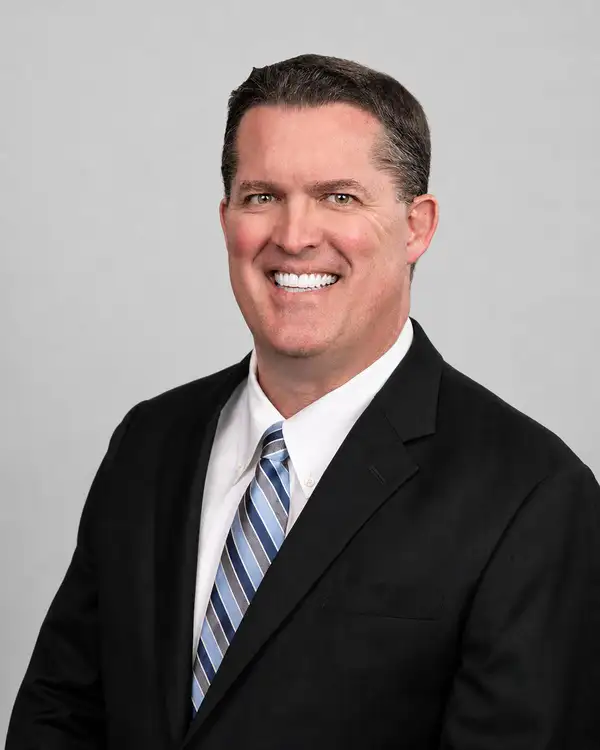
Sam A. Maida, Jr.
Owner and Managing Attorney
Sam A. Maida, Jr. has represented injured Texans in the greater Houston area since the firm opened in 1993.
State Bar of TexasAvvoMartindale-HubbellLawLinkThatCarHitMeLinkedIn
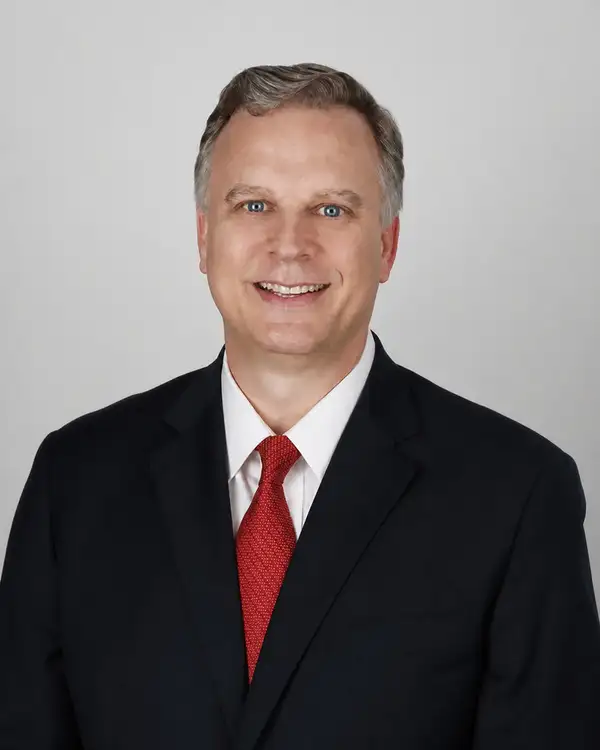
Bernard G. Johnson III
Litigation Managing Attorney
Bernard G. Johnson III is a board certified trial lawyer licensed in Texas since 1996 and a graduate of South Texas College of Law.