The short version
- Two claims can exist at once: against the drunk driver, and against the bar, restaurant or club that served them under Texas dram shop law.
- The dram shop test is specific. It must have been apparent to the provider that the person was "obviously intoxicated to the extent that he presented a clear danger to himself and others", and that intoxication must be a proximate cause of the damage (§ 2.02(b)).
- An adult 21 or over can also be liable for damages caused by a minor under 18 they knowingly served or allowed to be served on their premises (§ 2.02(c)).
- Exemplary damages require clear and convincing evidence of fraud, malice or gross negligence (§ 41.003(a)) — and the statutory cap in § 41.008(b) does not apply where the conduct is intoxication assault or intoxication manslaughter (§ 41.008(c)(14)–(15)).
- Harris County recorded 115,173 crashes in 2024, including 546 fatal crashes and 2,282 suspected-serious-injury crashes. Source: TxDOT, Crashes and Injuries by County 2024. A criminal DWI case runs on its own timetable and does not pause your two-year civil deadline.
Houston drunk driving claims: key facts
| Fact | Answer |
|---|---|
| Law firm | Maida Law Firm — Houston personal-injury firm |
| Practice on this page | Houston Drunk Driving Claims |
| Area served | Houston and the surrounding communities listed under Areas We Serve |
| Office | 8313 Southwest Fwy Ste 102, Houston, TX 77074 · (713) 785-9484 |
| Author | Sam A. Maida, Jr. — Texas Bar No. 00787950 |
| Reviewer | Bernard G. Johnson III — Texas Bar No. 00796832 |
| Consultation and fee | Free Consultation; Contingency Fee — no attorney’s fee unless there is a recovery |
| Google rating | 4.9 stars from 365 reviews (Google, 21 September 2026) |
| Deadline to file | Two years from the day the cause of action accrues — Tex. Civ. Prac. & Rem. Code § 16.003(a) |
Who can be liable after a Houston drunk driving crash
| Defendant | What has to be proved | Source |
|---|---|---|
| The intoxicated driver | Ordinary negligence — the criminal case is separate and is decided to a different standard. | Common law; Tex. Civ. Prac. & Rem. Code § 33.001 governs apportionment |
| A bar, restaurant or club | That it was apparent to the provider the person was obviously intoxicated to the extent of presenting a clear danger to himself and others, and that the intoxication was a proximate cause of the damages. | Tex. Alco. Bev. Code § 2.02(b) |
| An adult who served a minor | That an adult 21 or over knowingly served, or allowed to be served on premises they own or lease, alcohol contributing to the intoxication of a minor under 18 — excluding the minor's parent, guardian or spouse. | Tex. Alco. Bev. Code § 2.02(c) |
| Exemplary damages | Clear and convincing evidence that the harm resulted from fraud, malice or gross negligence. | Tex. Civ. Prac. & Rem. Code § 41.003(a) |
| The cap on exemplary damages | The greater of twice economic damages plus non-economic damages up to $750,000, or $200,000 — but the cap does not apply to conduct described as intoxication assault or intoxication manslaughter. | Tex. Civ. Prac. & Rem. Code § 41.008(b), (c)(14)–(15) |
Chapter 2 also provides that a provider's liability under it is in lieu of common law warranties and duties (§ 2.03(a)), so a dram shop claim is brought under the statute rather than alongside a parallel common law claim against the same provider.
Deadlines that can end this claim
| Situation | Deadline | Source |
|---|---|---|
| Most injury lawsuits | Two years from the day the cause of action accrues. | Tex. Civ. Prac. & Rem. Code § 16.003(a) |
| An injury that causes death | Two years, running from the date of death. | Tex. Civ. Prac. & Rem. Code § 16.003(b) |
| A City of Houston, Harris County, METRO or state vehicle | Written notice to the governmental unit not later than six months after the incident, describing the injury, the time and place, and the incident — and a city charter can require it sooner. | Tex. Civ. Prac. & Rem. Code § 101.101 |
| Reporting the crash itself | Immediately, by the quickest means of communication, if anyone was injured or killed or a vehicle cannot be driven normally and safely. | Tex. Transp. Code § 550.026(a) |
| If you were partly at fault | No deadline, but a hard bar: a claimant may not recover if their percentage of responsibility is greater than 50 percent. | Tex. Civ. Prac. & Rem. Code § 33.001 |
Questions people ask after a Houston crash
Tap a question to open it.
Who else can be responsible besides the driver?
The establishment that served them, if the statutory test is met. Section 2.02(b) allows a claim against a provider on proof that, at the time of the provision, it was apparent to the provider that the individual was obviously intoxicated to the extent that he presented a clear danger to himself and others, and that the intoxication was a proximate cause of the damages. That is a demanding standard aimed at visible over-service, not at any bar that sold a drink. A separate route exists under § 2.02(c) against an adult who knowingly served a minor under 18, or allowed one to be served on premises they own or lease.
Who investigates and does a conviction help my claim?
The Houston Police Department inside city limits, the Harris County Sheriff's Office outside, and DPS on much of the highway system. A criminal conviction is useful but it is not the claim: the criminal case is proved beyond reasonable doubt and punishes the driver, while your civil claim is decided on the balance of the evidence and compensates you. The two run on independent timetables, and a criminal case can take longer than the two-year civil limitations period in § 16.003. Waiting for the criminal outcome before starting the civil claim is a common and expensive mistake.
What is a dram shop claim and how hard is it to prove?
It is the statutory claim against the provider under Chapter 2 of the Alcoholic Beverage Code, and the difficulty is the word "apparent". You must show that the person's intoxication was visible to the provider at the time of service, to the degree that they presented a clear danger to themselves and others. That is proved with evidence of what the person looked like and consumed — receipts and card statements showing the number and timing of drinks, point-of-sale records, security footage from inside the premises, server statements and any prior incident history. None of that survives indefinitely, which is why the establishment has to be identified early.
What if the driver was not convicted, or charges were dropped?
It does not end your claim. The criminal standard is proof beyond reasonable doubt and prosecutions fail for reasons that have nothing to do with civil liability — a suppression ruling, a witness who becomes unavailable, a charging decision. Your civil case asks a different question to a lower standard: whether the driver's negligence caused your injury. Evidence excluded from a criminal trial may still be available in the civil case, and the civil claim can proceed on ordinary negligence even where intoxication is disputed, because the driver's conduct behind the wheel is provable independently of the blood alcohol result.
What are exemplary damages and when do they arise?
They are damages awarded to punish rather than to compensate, and § 41.003(a) allows them only where the claimant proves by clear and convincing evidence that the harm resulted from fraud, malice or gross negligence. That is a materially higher standard than ordinary negligence. The point that matters most in drunk driving cases is the cap: § 41.008(b) normally limits exemplary damages to the greater of twice economic damages plus non-economic damages up to $750,000, or $200,000 — but § 41.008(c) disapplies that cap for conduct described as a felony under Penal Code § 49.07, intoxication assault, or § 49.08, intoxication manslaughter.
Where do I find out where the driver was drinking?
From the police investigation and from the driver's own records. The crash report and any arrest narrative frequently identify the last place of service, because officers ask. Beyond that, the trail is financial and electronic: card statements, receipts, mobile payment records, and the driver's phone and social media around the hours before the crash. Once an establishment is identified, its point-of-sale data and interior camera footage become the evidence, and both are subject to short retention cycles. A preservation demand sent within days is often the difference between a viable dram shop claim and an unprovable one.
Where does a dram shop case get filed?
Ordinarily Harris County if the establishment or the crash is here, with the civil district courts at the Harris County Civil Courthouse, 201 Caroline Street, Houston, TX 77002. A dram shop defendant is usually better insured than an individual driver, which is one practical reason the claim matters where injuries are catastrophic and the driver carries only the Texas minimum of $30,000. It also means the defence is more professional and better resourced from the outset, and that the investigation on the other side begins immediately.
When do I need to act to preserve the evidence?
Within days rather than weeks. Interior security footage at a bar or restaurant is commonly overwritten within a fortnight, point-of-sale records are archived, and staff turnover means the server who poured the drinks may be unreachable within a couple of months. The driver's vehicle is repaired or scrapped. By contrast, the medical side of the case can be developed on its own timetable and does not expire. So the sequence in a drunk driving case is to preserve first and treat the damages workup as the longer, later task.
When does my time to sue run out?
Two years from accrual under § 16.003(a), or two years from the date of death under § 16.003(b) if the crash proves fatal. A pending criminal prosecution does not extend it. If a governmental vehicle is involved, § 101.101 requires written notice within six months. The interaction that catches families is a fatal crash where the criminal case is still running at the two-year mark: the civil suit has to be filed regardless, and can then proceed on its own schedule, but the deadline does not wait for a verdict in the criminal court.
Why do these cases sometimes take longer than an ordinary crash?
Because two or three processes run in parallel. There is the criminal prosecution, which controls access to some evidence and to the driver's testimony. There is the civil claim against the driver. And where a provider is involved there is a dram shop investigation requiring records, footage and witnesses from a business that has no interest in producing them. Where exemplary damages are sought the proof standard rises to clear and convincing evidence, which requires more development. None of that is wasted time, but it does mean a realistic timeline is longer than a straightforward two-vehicle collision.
Why does the driver's insurance often not cover the loss?
Because Texas only requires $30,000 per person and $60,000 per crash under § 601.072, and a drunk driving crash tends to produce injuries far beyond that. Some policies also contain exclusions relevant to intoxicated operation. That gap is exactly why the other avenues matter: a dram shop defendant with commercial cover, an employer if the driver was working, and your own uninsured or underinsured motorist coverage, which Texas requires insurers to provide unless a named insured rejected it in writing under § 1952.101(b).
How is intoxication proved in the civil case?
Often without needing the criminal result at all. The blood or breath result is the most direct evidence where it exists, but the civil case can also be proved with the officer's observations and body-camera footage, field sobriety performance, witness accounts of driving behaviour, receipts and service records showing consumption, and the physical evidence of the crash itself. Because the civil standard is the balance of the evidence rather than beyond reasonable doubt, a combination of these can establish intoxication even where a criminal prosecution failed or was never brought.
How does a claim work if a family member died?
Two separate claims arise. The wrongful death claim under § 71.002 is for the exclusive benefit of the surviving spouse, children and parents (§ 71.004(a)) and compensates their own loss. The survival claim under § 71.021 belongs to the estate and covers what the person who died endured before death; it does not abate at death and passes to the heirs, legal representatives and estate. Both are subject to the two-year deadline running from the date of death under § 16.003(b). Where intoxication manslaughter is involved, the exemplary damages cap in § 41.008(b) does not apply.
How much of the recovery does my own fault affect?
Directly and severely. Under § 33.001 a claimant may not recover at all if their percentage of responsibility is greater than 50 percent, and below that threshold the award is reduced by the percentage assigned. So even where the other driver was plainly intoxicated, the defence will look for a share to attribute to you — speed, lane position, attention, or a decision to ride with someone who had been drinking. That last argument is the one families find hardest, and it is answered with the same evidence that proves the collision itself rather than with indignation.
4.9 out of 5 from 365 Google reviews. Read them on Google.
★★★★★
Hi, I would recommend their services they were very helpful in handling and resolving my case. I received great medical care on their behalf and I was taken care of as a client by Mr. Gabriel he went above and beyond to ensure I didn't settle for less than I was owed.
★★★★★
Maida law firm was great. They have amazing communication. The staff was also very friendly and professional. The process was fast and they are very reliable. I will definitely be recommending them to all my friends and family. Thank you so much Maida Law Firm.
Reviews are the opinions of the clients who wrote them. Past results do not guarantee or predict a similar outcome in any future case.
Everything we publish on this topic
This page is the hub for houston drunk driving claims. Below is every guide, explainer and case note on the site that belongs to it, so you can go straight to the situation that matches yours.
- Houston Dram Shop Lawyer
- Houston DWI Accident Lawyer
- Accident Attorney: Hit by a Drunk Driver
- What Are Dram Shop Laws
- DWI Stats in Texas: Sugar Land Car Accident Attorney
- What are your options after a drunk driving accident in Houston
- What you should know about Houston drunk driving accidents
7 related pages.
After a crash in southwest Houston
Our office is on the Southwest Freeway, and the crashes we see from this side of Houston cluster on the same few roads. These are the emergency rooms, stations and the courthouse involved most often.
| What | Where |
|---|---|
| Main freeways | Southwest Freeway (I-69/US 59) · Sam Houston Tollway / Beltway 8 · Westpark Tollway · US 90 Alternate |
| Nearest emergency rooms | HCA Houston ER 24/7 - Westchase — 11103 Westheimer Rd, Houston |
| Memorial Hermann Southwest Hospital Emergency Center — 7600 Beechnut St, Houston | |
| Emergency Room at HCA Houston West — 12141 Richmond Ave, Houston | |
| HCA Houston ER 24/7 - Bellaire — 5413 S Rice Ave, Houston | |
| Post Oak ER - Emergency Room and Urgent ER Care — 5018 San Felipe St, Houston | |
| Police stations | Houston Police Department Westside — 3203 S Dairy Ashford Rd, Houston |
| Houston Police Department South Gessner — 8605 Westplace Dr, Houston | |
| Houston Police Department Southwest Substation — 13097 Nitida St, Houston | |
| City of Southside Place Police Department — 6309 Edloe St, Houston | |
| Where suit is filed | Harris County Civil Courthouse — 201 Caroline St, Houston, TX 77002 |
Emergency rooms and stations from Google Places within about 9 km of our office; freeways from OpenStreetMap; courthouse confirmed in the county seat. Verified 28 August 2026. Go to the nearest ER in an emergency — this list is for orientation, not medical advice.
Recent Houston-area crashes of this kind
Each incident is linked to the news outlet that reported it, newest first. We were not involved in these cases, describe them only as published and do not assess who was at fault.
- Driver charged with intoxication manslaughter after a Southwest Freeway crash ABC13 / KTRK, July 2026
- SUV strikes a USPS tractor-trailer on the West Sam Houston Tollway ABC13 / KTRK, August 2026
- Felony DWI charge after a northwest Harris County crash kills a child passenger ABC13 / KTRK, August 2026
Related Houston claims we handle
Where we are in Houston
Maida Law Firm
8313 Southwest Fwy Ste 102, Houston, TX 77074
We are on the Southwest Freeway, minutes from the 610 Loop and Sharpstown, and we see clients from across Harris County.
About the authors
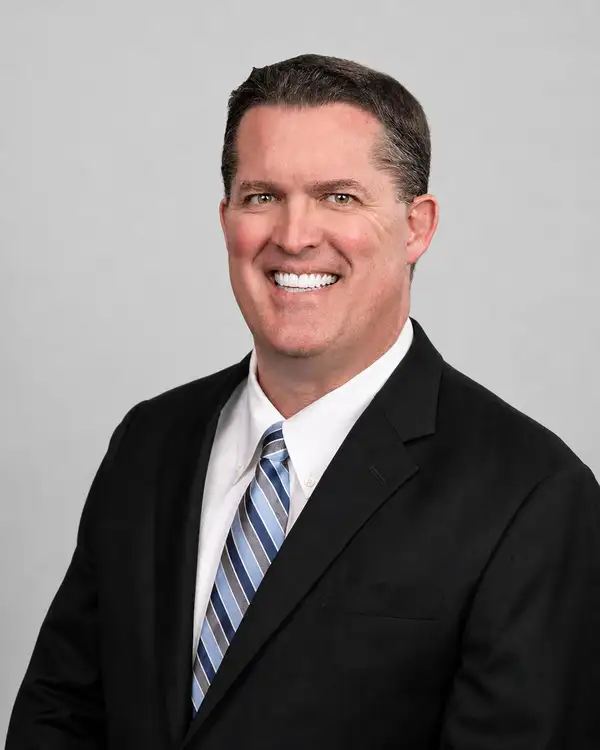
Sam A. Maida, Jr.
Owner and Managing Attorney
Sam A. Maida, Jr. has represented injured Texans in the greater Houston area since the firm opened in 1993.
State Bar of TexasAvvoMartindale-HubbellLawLinkThatCarHitMeLinkedIn

Bernard G. Johnson III
Litigation Managing Attorney
Bernard G. Johnson III is a board certified trial lawyer licensed in Texas since 1996 and a graduate of South Texas College of Law.