The short version
- Texas dram shop liability has a precise statutory test, and it is narrower than most people assume.
- It must have been apparent to the provider that the person was "obviously intoxicated to the extent that he presented a clear danger to himself and others" at the time of service — and that intoxication must have been a proximate cause of the damages (§ 2.02(b)).
- A separate route exists against an adult 21 or over who knowingly served a minor under 18, or allowed one to be served on premises they own or lease — excluding the minor's parent, guardian or spouse (§ 2.02(c)).
- The statute is the exclusive route against a provider: liability under Chapter 2 is in lieu of common law warranties and duties (§ 2.03(a)).
- ⚠ The evidence — receipts, point-of-sale data, interior footage, server accounts — is gone within weeks. This is the claim most often lost to delay rather than to the merits.
Houston drunk driving claims: key facts
| Fact | Answer |
|---|---|
| Law firm | Maida Law Firm — Houston personal-injury firm |
| Practice on this page | Houston Drunk Driving Claims |
| Area served | Houston and the surrounding communities listed under Areas We Serve |
| Office | 8313 Southwest Fwy Ste 102, Houston, TX 77074 · (713) 785-9484 |
| Author | Sam A. Maida, Jr. — Texas Bar No. 00787950 |
| Reviewer | Bernard G. Johnson III — Texas Bar No. 00796832 |
| Consultation and fee | Free Consultation; Contingency Fee — no attorney’s fee unless there is a recovery |
| Google rating | 4.9 stars from 365 reviews (Google, 21 September 2026) |
| Deadline to file | Two years from the day the cause of action accrues — Tex. Civ. Prac. & Rem. Code § 16.003(a) |
The dram shop test, element by element
| Element | What must be shown | Source |
|---|---|---|
| Apparent at the time of service | That it was apparent to the provider, at the time the alcohol was provided, that the individual was obviously intoxicated | Tex. Alco. Bev. Code § 2.02(b)(1) |
| To a defined degree | Obviously intoxicated to the extent that he presented a clear danger to himself and others | Tex. Alco. Bev. Code § 2.02(b)(1) |
| Causation | That the intoxication of the recipient was a proximate cause of the damages suffered | Tex. Alco. Bev. Code § 2.02(b)(2) |
| Serving a minor (separate route) | An adult 21 or over who knowingly served, or allowed to be served on premises they own or lease, alcohol contributing to the intoxication of a minor under 18 — not the minor's parent, guardian or spouse | Tex. Alco. Bev. Code § 2.02(c) |
| Exclusivity | A provider's liability under this chapter is in lieu of common law or other statutory warranties and duties | Tex. Alco. Bev. Code § 2.03(a) |
| Common law claims preserved | The chapter does not affect the right to bring a common law action against the individual whose consumption caused the harm | Tex. Alco. Bev. Code § 2.02(a) |
Deadlines that can end this claim
| Situation | Deadline | Source |
|---|---|---|
| Most injury lawsuits | Two years from the day the cause of action accrues. | Tex. Civ. Prac. & Rem. Code § 16.003(a) |
| An injury that causes death | Two years, running from the date of death. | Tex. Civ. Prac. & Rem. Code § 16.003(b) |
| A City of Houston, Harris County, METRO or state vehicle | Written notice to the governmental unit not later than six months after the incident, describing the injury, the time and place, and the incident — and a city charter can require it sooner. | Tex. Civ. Prac. & Rem. Code § 101.101 |
| Reporting the crash itself | Immediately, by the quickest means of communication, if anyone was injured or killed or a vehicle cannot be driven normally and safely. | Tex. Transp. Code § 550.026(a) |
| If you were partly at fault | No deadline, but a hard bar: a claimant may not recover if their percentage of responsibility is greater than 50 percent. | Tex. Civ. Prac. & Rem. Code § 33.001 |
Questions people ask after a Houston crash
Tap a question to open it.
Who exactly can be a "provider" under the dram shop statute?
Anyone who provided, sold or served the alcohol in circumstances the statute covers — most commonly a bar, restaurant, club or venue holding a licence, but the language of § 2.02(b) is about the act of providing rather than about the type of business. Section 2.02(c) reaches further in one specific situation: an adult aged 21 or over who knowingly served a minor under 18, or allowed a minor to be served on premises the adult owns or leases, is liable for damages proximately caused by that minor's intoxication — with the minor's parent, guardian or spouse expressly excluded.
What does "obviously intoxicated" actually mean in practice?
It sets a visible-at-the-time standard rather than a blood-alcohol one. The statute requires that it was apparent to the provider, at the moment of service, that the person was obviously intoxicated to the extent of presenting a clear danger to himself and others. So a later blood test showing a high concentration is not automatically enough — the question is what the server could observe. That is proved with evidence of consumption and presentation: the number and timing of drinks from point-of-sale data and receipts, interior camera footage, and accounts from staff and other patrons.
What evidence wins or loses a dram shop case?
Point-of-sale records showing what was served and when; card statements and receipts; interior security footage showing the person's condition; server and manager accounts; staffing and training records; and any prior incident history at the premises. The problem is durability. Interior footage is commonly overwritten within a fortnight, point-of-sale data is archived, and staff turnover in hospitality means the server who poured the drinks may be unreachable within a couple of months. A written preservation demand in the first days is frequently decisive.
What if the drinker bought their own drinks and seemed fine?
Then the claim is difficult, and that is the correct outcome under the statute rather than a failure of the case. Chapter 2 does not make a provider an insurer against every consequence of drinking; it targets service to someone whose intoxication was apparent and dangerous at the time. Where the evidence shows a person who was served normally and showed no visible impairment, the dram shop route is not available — but the ordinary claim against the driver remains entirely intact, and § 2.02(a) expressly preserves the common law action against the individual whose consumption caused the harm.
Where does the dram shop claim get filed?
Ordinarily Harris County if the establishment or the crash is here, with the civil district courts at 201 Caroline Street, Houston. A licensed venue is generally better insured than an individual driver, which is precisely why the claim matters where injuries are catastrophic and the driver carries only the $30,000 Texas minimum under § 601.072. It also means the defence is professional and well resourced from the first day, and that the venue's own investigation of the evening begins long before yours does.
When do I need to identify the establishment?
Within days. Everything that proves the case sits inside a business that has no obligation to volunteer it and every commercial reason not to. The trail is usually financial and electronic: the driver's card statements, receipts, mobile payment records, phone location data and social media around the hours before the crash, plus whatever the police investigation recorded about the last place of service. Once identified, a preservation demand should follow immediately, because retention cycles do the destroying long before anyone acts in bad faith.
Why is this claim brought under the statute rather than at common law?
Because § 2.03(a) makes it exclusive: the liability of providers under Chapter 2 for the actions of their employees, customers, members or guests who are or become intoxicated is in lieu of common law or other statutory warranties and duties. So there is no parallel negligence claim against the same provider for the same service — the statutory test is the test. What § 2.02(a) preserves is different: the common law claim against the individual whose own consumption caused the harm, which is your ordinary claim against the driver.
Why does the statute require proximate cause as a separate element?
Because over-service alone is not liability. Section 2.02(b)(2) requires proof that the intoxication of the recipient was a proximate cause of the damages suffered, which is a distinct question from whether the person was visibly drunk when served. In practice that means connecting the impairment to the manner of driving and to the collision — through the physical evidence of the crash, the driving behaviour witnesses describe, and the timeline between the last service and the impact. A gap in that chain defeats the claim even where the service was plainly improper.
How does a dram shop claim change what is available to me?
It adds a defendant with commercial insurance, which is frequently the difference between a claim limited by a minimum policy and one that reflects the loss. It does not replace the claim against the driver — both proceed, with responsibility apportioned under Chapter 33 and the 50 percent bar in § 33.001 still applying to your own share. It also lengthens the case, because a venue defends vigorously and the evidence has to be extracted through discovery rather than requested politely.
How soon should I call about a possible dram shop claim?
Immediately, and before you know whether the claim exists. That sounds backwards, but identifying the establishment and sending a preservation demand are useful even if the evidence later shows service was proper — whereas waiting until you are sure guarantees the footage is gone. The consultation is free and there is no obligation, and representation is on a contingency fee set out in writing before you sign. The cost of asking early is nothing; the cost of asking late is usually the claim.
4.9 out of 5 from 365 Google reviews. Read them on Google.
★★★★★
Hi, I would recommend their services they were very helpful in handling and resolving my case. I received great medical care on their behalf and I was taken care of as a client by Mr. Gabriel he went above and beyond to ensure I didn't settle for less than I was owed.
★★★★★
Maida law firm was great. They have amazing communication. The staff was also very friendly and professional. The process was fast and they are very reliable. I will definitely be recommending them to all my friends and family. Thank you so much Maida Law Firm.
Reviews are the opinions of the clients who wrote them. Past results do not guarantee or predict a similar outcome in any future case.
Recent Houston-area crashes of this kind
Each incident is linked to the news outlet that reported it, newest first. We were not involved in these cases, describe them only as published and do not assess who was at fault.
- SUV strikes a USPS tractor-trailer on the West Sam Houston Tollway ABC13 / KTRK, August 2026
Related Houston claims we handle
Where we are in Houston
Maida Law Firm
8313 Southwest Fwy Ste 102, Houston, TX 77074
We are on the Southwest Freeway, minutes from the 610 Loop and Sharpstown, and we see clients from across Harris County.
About the authors
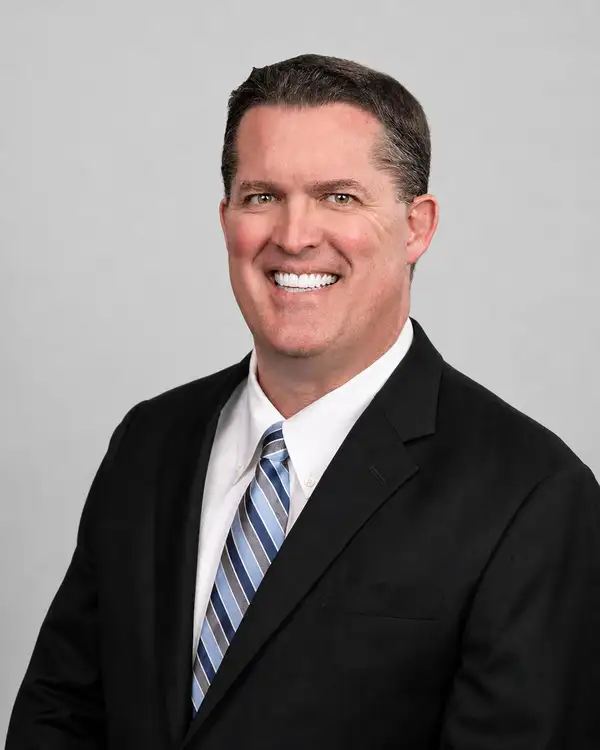
Sam A. Maida, Jr.
Owner and Managing Attorney
Sam A. Maida, Jr. has represented injured Texans in the greater Houston area since the firm opened in 1993.
State Bar of TexasAvvoMartindale-HubbellLawLinkThatCarHitMeLinkedIn

Bernard G. Johnson III
Litigation Managing Attorney
Bernard G. Johnson III is a board certified trial lawyer licensed in Texas since 1996 and a graduate of South Texas College of Law.