The short version
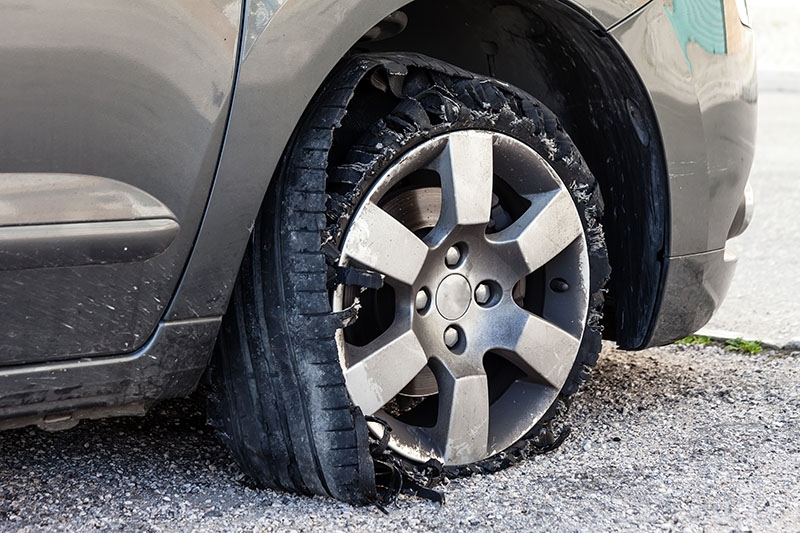
- Sometimes the crash was one party's fault and the injuries were made worse by the vehicle. Those are two separate claims and both can be pursued at once.
- A design defect claim requires proof of a safer alternative design and that the defect was a producing cause of the injury (§ 82.005(a)).
- The dealer or retailer is usually not liable — a seller that did not manufacture the product answers only through one of the specific routes in § 82.003(a).
- ⛔ Do not let the vehicle be repaired or salvaged. Once it is gone, so are the restraint components, the event data recorder and the crush evidence — and with them the claim.
- Products claims carry their own timing rules under § 16.012, in addition to the ordinary two-year period.
Houston defective product claims: key facts
| Fact | Answer |
|---|---|
| Law firm | Maida Law Firm — Houston personal-injury firm |
| Practice on this page | Houston Defective Product Claims |
| Area served | Houston and the surrounding communities listed under Areas We Serve |
| Office | 8313 Southwest Fwy Ste 102, Houston, TX 77074 · (713) 785-9484 |
| Author | Sam A. Maida, Jr. — Texas Bar No. 00787950 |
| Reviewer | Bernard G. Johnson III — Texas Bar No. 00796832 |
| Consultation and fee | Free Consultation; Contingency Fee — no attorney’s fee unless there is a recovery |
| Google rating | 4.9 stars from 368 reviews (Google, 21 September 2026) |
| Deadline to file | Two years from the day the cause of action accrues — Tex. Civ. Prac. & Rem. Code § 16.003(a) |
Two claims from one crash
| The collision claim | The component claim | |
|---|---|---|
| Against whom | The at-fault driver, and their employer if working | The manufacturer of the vehicle or component |
| What is alleged | Negligent driving | A manufacturing, design or marketing defect |
| What must be proved | Failure to exercise ordinary care | For design: a safer alternative design and producing cause (§ 82.005(a)) |
| Key evidence | Crash report, scene evidence, event data recorder | The vehicle itself, engineering analysis, the maker's design history |
| Insurance available | Often the $30,000 statutory minimum | A manufacturer, not a personal auto policy |
| If the vehicle is scrapped | The claim survives | The claim is usually finished |
This is why the preservation step matters more here than anywhere else on this site: one of these two claims cannot survive the loss of the vehicle, and insurers arrange salvage within days.
Deadlines that can end this claim
| Situation | Deadline | Source |
|---|---|---|
| Most injury lawsuits | Two years from the day the cause of action accrues. | Tex. Civ. Prac. & Rem. Code § 16.003(a) |
| An injury that causes death | Two years, running from the date of death. | Tex. Civ. Prac. & Rem. Code § 16.003(b) |
| A City of Houston, Harris County, METRO or state vehicle | Written notice to the governmental unit not later than six months after the incident, describing the injury, the time and place, and the incident — and a city charter can require it sooner. | Tex. Civ. Prac. & Rem. Code § 101.101 |
| Reporting the crash itself | Immediately, by the quickest means of communication, if anyone was injured or killed or a vehicle cannot be driven normally and safely. | Tex. Transp. Code § 550.026(a) |
| If you were partly at fault | No deadline, but a hard bar: a claimant may not recover if their percentage of responsibility is greater than 50 percent. | Tex. Civ. Prac. & Rem. Code § 33.001 |
Questions people ask after a Houston crash
Tap a question to open it.
What is an enhanced injury claim?
It is the claim that the collision was survivable, or would have been far less serious, but the vehicle made it worse. The other driver caused the crash; the manufacturer is answerable for the additional harm caused by a component that did not perform as it should. Airbags that did not deploy or deployed improperly, seat belts that released or allowed excessive excursion, seats that collapsed, roofs that crushed in a rollover, and fuel systems that ignited are the recurring categories. Both claims proceed together, with responsibility apportioned under Chapter 33.
Why can I usually not sue the dealership?
Because § 82.003(a) says a seller that did not manufacture a product is not liable for harm caused by it unless the claimant proves one of the specific routes the section lists — participation in the design, alteration or modification that caused the harm, installation of the product, actual knowledge of the defect, and others. The policy is that a dealer passing on a sealed manufactured product should not answer for a defect it did not create and could not detect. Where a dealer serviced or modified the vehicle, that is a different question and worth examining.
What does a "safer alternative design" mean in practice?
It is the element that decides most design cases. Section 82.005(a) puts the burden on the claimant to prove, by a preponderance of the evidence, both that a safer alternative design existed and that the defect was a producing cause of the injury. In practice that means demonstrating a design that would have prevented or significantly reduced the risk without substantially impairing the product's utility, and that it was economically and technologically feasible at the time of manufacture. That is engineering work, and it is why these cases require expert analysis rather than argument.
What if there is a recall for my vehicle?
A recall is useful and it is not the case. It can show the manufacturer knew of a problem, define the defect and identify the affected units, and it frequently opens up a design history that would otherwise require discovery. But it does not establish that this defect caused your injury, and manufacturers routinely argue that a recall was precautionary, addressed a different failure mode, or did not cover your vehicle. So it is a starting point for proof rather than a substitute for it — and the vehicle itself remains the central evidence.
What should I do with the vehicle after the crash?
Keep it, unrepaired and unsalvaged, and say so in writing to your insurer immediately. This is the most time-critical instruction on this site. Insurers arrange salvage or repair within days for entirely ordinary commercial reasons, and once that happens the restraint components, the event data recorder and the crush pattern are gone permanently. A written demand identifying the vehicle by VIN, sent to every insurer involved and to whoever physically holds it, converts routine disposal into a decision someone has to justify.
Where does the tyre or component manufacturer come in?
Wherever the failed part was not made by the vehicle manufacturer, which is common — tyres, restraint systems, airbag inflators, batteries and electronic modules are frequently supplied by specialist companies. Each is a potential defendant in its own right with its own insurance, and identifying the actual manufacturer rather than the brand on the vehicle is part of the early work. Where the maker is overseas, questions of jurisdiction and service arise and can consume months, which is another reason these cases start early.
When does a products claim have to be brought?
The ordinary two-year period under § 16.003(a) applies, or two years from the date of death under § 16.003(b). But products liability carries additional provisions in § 16.012 that can affect timing independently of the general rule, and the analysis depends on when the product was sold as well as when the injury occurred. Because of that interaction, this is not a category where assuming "two years from the crash" is safe, and the age of the vehicle is a question worth raising at the first conversation.
When is the vehicle inspected, and who is present?
By agreement, usually, and often later than you would expect. A defect case normally requires examination by an engineer, and that examination is frequently destructive — disassembly, sectioning or testing that permanently alters the item. Because the manufacturer is entitled to have its own expert present and to object to methods that destroy evidence, inspections are arranged under a protocol between the parties. Setting that up takes time, which is one more reason preservation and early notice matter so much.
Why are these cases more expensive to bring?
Because they are proved with engineering rather than testimony. Establishing a safer alternative design that was feasible at the time requires expert analysis and sometimes physical testing, and reconstructing the manufacturer's own design history requires discovery that is contested. Manufacturers defend vigorously because an adverse finding has consequences beyond a single case. None of that makes a good claim unviable — it is handled on contingency like any other injury case — but it does mean the initial assessment of viability is more rigorous.
How does this differ from your general product liability page?
That page covers Chapter 82 across all products — consumer goods, industrial equipment, machinery. This one is specific to vehicles and to the situation that only arises in a crash: two claims from one event, where the driver caused the collision and the vehicle worsened the outcome. The preservation problem is also specific here, because a vehicle is the one defective product that a third party has both the right and the commercial motive to destroy within days.
4.9 out of 5 from 368 Google reviews. Read them on Google.
★★★★★
Hi, I would recommend their services they were very helpful in handling and resolving my case. I received great medical care on their behalf and I was taken care of as a client by Mr. Gabriel he went above and beyond to ensure I didn't settle for less than I was owed.
★★★★★
Maida law firm was great. They have amazing communication. The staff was also very friendly and professional. The process was fast and they are very reliable. I will definitely be recommending them to all my friends and family. Thank you so much Maida Law Firm.
Reviews are the opinions of the clients who wrote them. Past results do not guarantee or predict a similar outcome in any future case.
After a crash in southwest Houston
Our office is on the Southwest Freeway, and the crashes we see from this side of Houston cluster on the same few roads. These are the emergency rooms, stations and the courthouse involved most often.
| What | Where |
|---|---|
| Main freeways | Southwest Freeway (I-69/US 59) · Sam Houston Tollway / Beltway 8 · Westpark Tollway · US 90 Alternate |
| Nearest emergency rooms | HCA Houston ER 24/7 - Westchase — 11103 Westheimer Rd, Houston |
| Memorial Hermann Southwest Hospital Emergency Center — 7600 Beechnut St, Houston | |
| Emergency Room at HCA Houston West — 12141 Richmond Ave, Houston | |
| HCA Houston ER 24/7 - Bellaire — 5413 S Rice Ave, Houston | |
| Post Oak ER - Emergency Room and Urgent ER Care — 5018 San Felipe St, Houston | |
| Police stations | Houston Police Department Westside — 3203 S Dairy Ashford Rd, Houston |
| Houston Police Department South Gessner — 8605 Westplace Dr, Houston | |
| Houston Police Department Southwest Substation — 13097 Nitida St, Houston | |
| City of Southside Place Police Department — 6309 Edloe St, Houston | |
| Where suit is filed | Harris County Civil Courthouse — 201 Caroline St, Houston, TX 77002 |
Emergency rooms and stations from Google Places within about 9 km of our office; freeways from OpenStreetMap; courthouse confirmed in the county seat. Verified 28 August 2026. Go to the nearest ER in an emergency — this list is for orientation, not medical advice.
Related Houston claims we handle
Where we are in Houston
Maida Law Firm
8313 Southwest Fwy Ste 102, Houston, TX 77074
We are on the Southwest Freeway, minutes from the 610 Loop and Sharpstown, and we see clients from across Harris County.
About the authors
Sam A. Maida, Jr.
Owner and Managing Attorney
Sam A. Maida, Jr. has represented injured Texans in the greater Houston area since the firm opened in 1993.
State Bar of TexasAvvoMartindale-HubbellLawLinkThatCarHitMeLinkedIn

Bernard G. Johnson III
Litigation Managing Attorney
Bernard G. Johnson III is a board certified trial lawyer licensed in Texas since 1996 and a graduate of South Texas College of Law.