The short version
- Texas is a fault state: the driver who caused the crash — and their insurer — pays. Nothing is owed by you up front, and the fee comes out of the recovery.
- Harris County recorded 115,173 crashes in 2024, including 546 fatal crashes and 2,282 suspected-serious-injury crashes. Source: TxDOT, Crashes and Injuries by County 2024.
- The rule that decides most disputed cases is proportionate responsibility: your recovery drops by your share of the blame and disappears entirely above 50% (§ 33.001). That is what an adjuster is building when they ask leading questions.
- Texas minimum liability cover is only $30,000 per person / $60,000 per crash / $25,000 property (§ 601.072). A serious injury routinely exceeds it, which is why your own UM/UIM cover matters (§ 1952.101).
- Two years to file (§ 16.003) — but only six months to give notice if a City of Houston, Harris County or METRO vehicle was involved (§ 101.101).
Houston car accident claims: key facts
| Fact | Answer |
|---|---|
| Law firm | Maida Law Firm — Houston personal-injury firm |
| Practice on this page | Houston Car Accident Claims |
| Area served | Houston and the surrounding communities listed under Areas We Serve |
| Office | 8313 Southwest Fwy Ste 102, Houston, TX 77074 · (713) 785-9484 |
| Author | Sam A. Maida, Jr. — Texas Bar No. 00787950 |
| Reviewer | Bernard G. Johnson III — Texas Bar No. 00796832 |
| Consultation and fee | Free Consultation; Contingency Fee — no attorney’s fee unless there is a recovery |
| Google rating | 4.9 stars from 368 reviews (Google, 21 September 2026) |
| Deadline to file | Two years from the day the cause of action accrues — Tex. Civ. Prac. & Rem. Code § 16.003(a) |
What the other driver's insurance has to cover
| Cover | Texas statutory minimum | Source |
|---|---|---|
| Bodily injury, one person | $30,000 | Tex. Transp. Code § 601.072(a-1)(1) |
| Bodily injury, two or more people | $60,000 per crash | Tex. Transp. Code § 601.072(a-1)(2) |
| Property damage | $25,000 | Tex. Transp. Code § 601.072(a-1)(3) |
| Uninsured / underinsured motorist | Must be offered in at least the Chapter 601 limits, and can only be left out if a named insured rejects it in writing. | Tex. Ins. Code § 1952.101 |
| Your share of the blame | No recovery at all above 50% responsibility. | Tex. Civ. Prac. & Rem. Code § 33.001 |
These are minimums, not typical policies. A driver carrying exactly the minimum can be fully at fault for a crash that costs far more than $30,000 to treat — which is a coverage problem, not a liability problem, and it is solved before the crash by carrying UM/UIM.
Deadlines that can end this claim
| Situation | Deadline | Source |
|---|---|---|
| Most injury lawsuits | Two years from the day the cause of action accrues. | Tex. Civ. Prac. & Rem. Code § 16.003(a) |
| An injury that causes death | Two years, running from the date of death. | Tex. Civ. Prac. & Rem. Code § 16.003(b) |
| A City of Houston, Harris County, METRO or state vehicle | Notice to the governmental unit not later than six months after the incident, describing the injury, the time and place, and the incident — and a city charter can require it sooner. | Tex. Civ. Prac. & Rem. Code § 101.101 |
| Reporting the crash itself | Immediately, by the quickest means of communication, if anyone was injured or killed or a vehicle cannot be driven normally and safely. | Tex. Transp. Code § 550.026(a) |
| If you were partly at fault | No deadline, but a hard bar: a claimant may not recover if their percentage of responsibility is greater than 50 percent. | Tex. Civ. Prac. & Rem. Code § 33.001 |
Questions people ask after a Houston crash
Tap a question to open it.
Who pays my medical bills while the case is going on?
Usually not the at-fault driver, and that surprises people. Their liability insurer normally pays once, at settlement — it does not pay bills as they arrive. In the meantime the sources are your own health insurance, any personal injury protection or medical payments cover on your own auto policy, and in some cases a letter of protection under which a provider treats you and waits to be paid from the recovery. Keep every bill and every explanation of benefits, because your health insurer or Medicare may later assert a lien against the settlement and that amount has to be negotiated before you see money. This is one of the most common reasons a settlement figure and the cheque you actually receive are different numbers.
Who is at fault if nobody got a ticket?
Fault in your claim is decided separately from any citation. A ticket is issued to a higher standard by an officer who usually did not see the crash, and drivers are frequently not cited in collisions where civil liability is obvious. Your claim is decided on the balance of the evidence, and Texas apportions responsibility between everyone involved under § 33.001. So the absence of a ticket does not defeat your claim, and the presence of one does not win it. What actually decides it is the physical evidence — damage pattern, debris, final rest positions — plus independent witnesses, camera footage, and the contributing-factor codes the investigating officer recorded on the CR-3 crash report.
What should I do in the first 48 hours after a Houston crash?
Get evaluated even if you feel able to walk away, because soft-tissue and closed-head injuries commonly present a day or two later and a gap in treatment is the argument an adjuster will make. Report the crash — § 550.026(a) requires immediate notice where there is injury, death, or a vehicle that cannot be driven safely. Photograph both vehicles, the final positions and the intersection before anything moves. Get names and numbers of witnesses, since the crash report may not list everyone. Then preserve evidence that expires: nearby businesses routinely overwrite camera footage within days, so a written request to keep it has to go out fast.
What is my car accident case actually worth?
There is no honest average, and a figure quoted before anyone has read your medical records is a guess. What sets the value is knowable: the medical evidence and whether treatment has finished, documented lost income, the permanence of the injury, the insurance limits available on the other side, and your own percentage of responsibility, which reduces recovery point for point and bars it entirely above 50%. Insurance limits are the ceiling people most often miss — a catastrophic injury caused by a driver carrying the Texas minimum of $30,000 per person is capped by that policy unless another defendant or your own UM/UIM cover is in play.
What if the other driver had no insurance, or not enough?
That is what uninsured and underinsured motorist coverage is for, and Texas requires insurers to offer it: under § 1952.101 an insurer may not issue an auto liability policy without providing UM/UIM unless a named insured rejects it in writing. Check your declarations page and, if it is not there, ask your insurer to produce the written rejection. UM applies where the at-fault driver has no cover or is never identified; UIM applies where their limits are exhausted but your damages exceed them. A UIM claim is made against your own insurer, which means the company you pay premiums to becomes the party disputing your injury — a shift most people do not expect.
Where do I get the Houston crash report?
The Texas Peace Officer's Crash Report, form CR-3, is filed electronically with TxDOT and can be purchased through its Crash Records Information System; a crash investigated by the Houston Police Department can also be requested through HPD Records once processing is complete. Which agency holds it depends on where the crash happened — HPD inside Houston city limits, the Harris County Sheriff's Office in unincorporated areas such as Atascocita, Aldine or Cypress. The report matters because the officer records contributing-factor codes on it. Those codes are not binding on a jury and are sometimes wrong, but they frame the adjuster's opening position, so an error is worth catching early.
Where will my case be filed if it does not settle?
Ordinarily Harris County, since that is where the crash and usually the defendant are. Civil district courts sit at the Harris County Civil Courthouse, 201 Caroline Street, Houston, TX 77002. Which court within the county depends on the amount in controversy — county civil courts at law handle claims up to their statutory limit and district courts take the larger ones. A crash on the western edge of the metro can fall in Fort Bend or Waller County instead, and Sugar Land matters are normally Fort Bend County at 1422 Eugene Heimann Circle in Richmond. Most cases never reach a courtroom, but filing in the right county from the outset avoids losing months against the two-year deadline.
When does my time to sue actually run out?
Two years from the day the cause of action accrues under § 16.003(a), which is normally the crash date. If the injury causes death, § 16.003(b) runs the two years from the date of death instead, and those are not always the same day. The exception that catches people is a government vehicle: § 101.101 requires notice to the governmental unit within six months of the incident, describing the injury, the time and place, and the incident — and a city charter may impose an even shorter period. That covers a City of Houston vehicle, a Harris County vehicle and a METRO bus. Six months passes quickly while someone is still in treatment.
When should I give the other insurer a recorded statement?
Not before you have advice, and you are generally not obliged to give one to the other side's insurer at all. A recorded statement is taken early precisely because your treatment is incomplete and your account of the sequence is still forming. Ordinary, honest answers — "I'm fine", "I didn't see them until the last second" — are quoted back later as an admission about injury or about your own attention. Your own insurer is different: your policy contains a cooperation clause, so a statement to your own carrier is usually required. Knowing which company is on the phone before you answer questions is the practical point.
Why does the adjuster keep asking about my old injuries?
To attribute your current condition to something that pre-dates the crash. It is a legitimate line of enquiry and also the single most common way a claim is devalued. Texas law does not require you to have been healthy before the crash — a defendant takes the injured person as they find them — but a pre-existing condition does change what has to be proved, because the recoverable harm is the aggravation the crash caused rather than the underlying condition. That is why complete prior records and a treating physician who can distinguish the two matter more here than in almost any other part of the claim.
Why did the insurer say my car was too lightly damaged for me to be hurt?
Because repair cost is the cheapest available proxy for injury, not because it is a good one. Modern bumpers and crush structures are designed to absorb energy and return to shape, so a low repair estimate is consistent with substantial force transmitted to occupants, and the biomechanical relationship between panel damage and occupant loading is weak. The way this argument is met is with medical evidence rather than argument — prompt evaluation, consistent treatment, imaging where indicated, and a physician's opinion on causation. Gaps in treatment do more damage to this issue than the photographs of the bumper ever do.
How is fault proved when the accounts do not agree?
With evidence that exists independently of either driver. That means signal timing and phase data where an intersection is involved, camera footage from nearby businesses and homes, the event data recorder in one or both vehicles, and the physical evidence — crush pattern, debris field and final rest positions — which together indicate the angle and sequence of impact. Independent witnesses matter and the CR-3 lists them. The constraint is time: private camera systems commonly overwrite within days to a fortnight, and vehicles are repaired or scrapped. A written preservation demand sent in the first week is frequently what separates a disputed case from a clear one.
How long does a Houston car accident claim take?
The honest answer is that it depends mostly on your medical treatment, not on the lawyers. A claim should not be settled before you reach maximum medical improvement, because once it settles it cannot be reopened if the injury turns out to be worse than thought. Straightforward claims with completed treatment and clear liability often resolve in a few months. Disputed liability, serious or permanent injury, several defendants, or a governmental defendant all extend it, and a filed lawsuit in Harris County adds the court's own timetable. Anyone promising a specific timeline at the first meeting is guessing.
How does a crash with a company vehicle change things?
It usually improves the insurance position and complicates the proof. If the driver was acting in the course and scope of employment their employer can be vicariously liable, and commercial policies carry far higher limits than the $30,000 statutory minimum. There may also be a direct claim against the employer for negligent hiring, training, supervision or maintenance, which brings company records into the case. If the vehicle belongs to a governmental unit the analysis changes again — the Texas Tort Claims Act waives immunity in defined circumstances, caps damages, and requires the six-month notice in § 101.101 — so identifying the vehicle's owner early genuinely changes what has to be done first.
4.9 out of 5 from 368 Google reviews. Read them on Google.
★★★★★
Hi, I would recommend their services they were very helpful in handling and resolving my case. I received great medical care on their behalf and I was taken care of as a client by Mr. Gabriel he went above and beyond to ensure I didn't settle for less than I was owed.
★★★★★
Maida law firm was great. They have amazing communication. The staff was also very friendly and professional. The process was fast and they are very reliable. I will definitely be recommending them to all my friends and family. Thank you so much Maida Law Firm.
Reviews are the opinions of the clients who wrote them. Past results do not guarantee or predict a similar outcome in any future case.
Everything we publish on this topic
This page is the hub for houston car accident claims. Below is every guide, explainer and case note on the site that belongs to it, so you can go straight to the situation that matches yours.
- Sugar Land Car Accident Lawyer
- Baytown Car Accident Lawyer
- Houston Bicycle Accident Lawyer
- Houston Pedestrian Accident Lawyer
- What to Do After a Houston Auto Accident
- Houston Failure to Stop Lawyer
- Houston Auto Accident Attorney
- Car Accident While Working in Texas: Workers' Compensation and Claims Against the Other Driver
- Car Accident with an Amazon Driver in Houston
- What is Attorney-Client Privilege with a Car Accident Lawyer?
- T-Bone Accident in Houston: Who Is at Fault in a Side-Impact Crash?
- Proven Bellaire Car Accidents lawyers
- Do I Need a Car Accident Attorney for an Insurance Claim in Texas?
- Houston Car Accident Attorney: Reckless Driving Crashes
- Texas Rules of the Road for Cyclists, and What Happens When a Car Hits a Bicycle in Houston
- Uninsured and Underinsured Motorist Claims in Texas: How They Work
- Car Accident FAQ: Houston Legal Questions Answered
- Will a Car Accident Claim Cover Alternative Medicine?
- Ask Your Houston Car Accident Lawyer If You Can Seek Damages
- Car Accident Lawyer: Types of Photos to Take of Crash
- Car Accident Lawyer: Stay Safe on the Road this Holiday Season
- Houston Car Accident Attorney: What is Tort Law?
- What Does a Houston Car Accident Lawyer Do? The Claim, Step by Step
- Houston Car Accident Lawyer: Why Witnesses are Important
- Talk to a Houston Personal Injury Lawyer if Insurance is Stalling
- Houston Car Accident Claim Amount
- How to Get a Copy of a Car Accident Report in Houston and Texas
- Katy TX Car Accident Attorney: I-10 Corridor Injuries
- Liability in Multi-Car Accidents
- Pearland & Friendswood Car Accident Attorney
- Do I Have to Share Medical Records with Insurance Adjuster?
- Strategies Insurers May Use After Your Car Accident
- Sugar Land Pedestrian Accident: Texas Right-of-Way Rules and How a Claim Works
- Before You Talk to the Insurance Adjuster After a Car Accident in Texas
- Tips for a Successful Insurance Claim After Texas Car Accident
- Houston Auto Accident Attorney: Top 5 Causes of Accidents
- What You Need for Your Case Evaluation with Car Accident Lawyer
- Who Is Liable in a Self-Driving Car Crash?
- Houston Auto Accident Statistics & Cost of Crashes
- Who to Call After a Houston Car Accident
40 related pages.
After a crash in southwest Houston
Our office is on the Southwest Freeway, and the crashes we see from this side of Houston cluster on the same few roads. These are the emergency rooms, stations and the courthouse involved most often.
| What | Where |
|---|---|
| Main freeways | Southwest Freeway (I-69/US 59) · Sam Houston Tollway / Beltway 8 · Westpark Tollway · US 90 Alternate |
| Nearest emergency rooms | HCA Houston ER 24/7 - Westchase — 11103 Westheimer Rd, Houston |
| Memorial Hermann Southwest Hospital Emergency Center — 7600 Beechnut St, Houston | |
| Emergency Room at HCA Houston West — 12141 Richmond Ave, Houston | |
| HCA Houston ER 24/7 - Bellaire — 5413 S Rice Ave, Houston | |
| Post Oak ER - Emergency Room and Urgent ER Care — 5018 San Felipe St, Houston | |
| Police stations | Houston Police Department Westside — 3203 S Dairy Ashford Rd, Houston |
| Houston Police Department South Gessner — 8605 Westplace Dr, Houston | |
| Houston Police Department Southwest Substation — 13097 Nitida St, Houston | |
| City of Southside Place Police Department — 6309 Edloe St, Houston | |
| Where suit is filed | Harris County Civil Courthouse — 201 Caroline St, Houston, TX 77002 |
Emergency rooms and stations from Google Places within about 9 km of our office; freeways from OpenStreetMap; courthouse confirmed in the county seat. Verified 28 August 2026. Go to the nearest ER in an emergency — this list is for orientation, not medical advice.
Southwest Houston car accident claims we handle
Our office sits on the Southwest Freeway in 77074, and most of the car accident calls we take from this side of Houston come from the Sharpstown, Gulfton and Braeburn area and the neighbouring 77036 and 77063 ZIPs — the stretch where the Southwest Freeway, Beltway 8 and the Westpark Tollway meet.
| ZIP | Neighbourhoods | Main routes | Note |
|---|---|---|---|
| 77074 | Sharpstown, Gulfton, Braeburn | Southwest Freeway (I-69/US 59), Beltway 8 | Our own ZIP — the office is on the Southwest Freeway. |
| 77036 | Sharpstown, Westwood, Braeburn, Whispering Oaks | Southwest Freeway (I-69/US 59), Beltway 8, Westpark Tollway | Directly west of the office, along the Beltway. |
| 77063 | Westpark Tollway corridor | Westpark Tollway, Beltway 8 | North of the Westpark Tollway. |
Neighbourhood names verified against OpenStreetMap and Google Places on 28 August 2026; freeway names from OpenStreetMap within about 6 km of the office. Serving an area is not the same as having an office in it — our only Houston office is the one on the Southwest Freeway.
Recent Houston-area crashes of this kind
Each incident is linked to the news outlet that reported it, newest first. We were not involved in these cases, describe them only as published and do not assess who was at fault.
- Driver charged with intoxication manslaughter after a Southwest Freeway crash ABC13 / KTRK, July 2026
- Driver sought after a fatal hit-and-run at Beechnut and Gessner ABC13 / KTRK, March 2026
- Pedestrian killed at Leeland and Fannin in downtown Houston FOX 26 Houston, April 2026
Related Houston claims we handle
Video: How Is a Houston Truck Accident Different From a Car Accident?
Maida Law Firm explains what sets a Houston truck accident claim apart from a car accident claim, and why acting quickly matters. Watch on YouTube
Where we are in Houston
Maida Law Firm
8313 Southwest Fwy Ste 102, Houston, TX 77074
We are on the Southwest Freeway, minutes from the 610 Loop and Sharpstown, and we see clients from across Harris County.
Read our 368 Google reviews (4.9 out of 5) · View our Google Business Profile
What results has Maida Law Firm recovered for injured clients?
Six published settlements from $1 million to $5.5 million, recovered by Maida Law Firm attorneys for Texans hurt in crashes with commercial trucks and company drivers. Five of the crashes happened in the Houston area. Each case page explains what happened, the injuries, and the evidence that proved the claim.
Past results do not guarantee a similar outcome. Every case is different and depends on its own facts.
Read every case, with the evidence that decided it, on our case results page.
About the authors
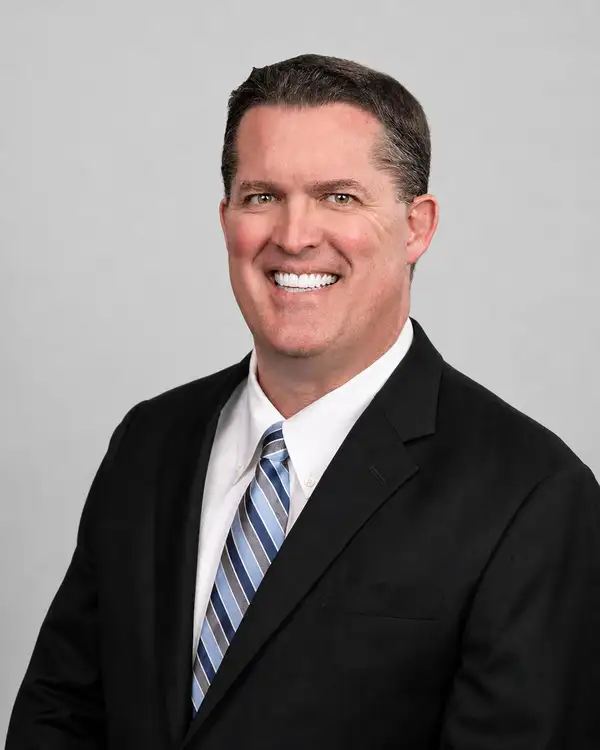
Sam A. Maida, Jr.
Owner and Managing Attorney
Sam A. Maida, Jr. has represented injured Texans in the greater Houston area since the firm opened in 1993.
State Bar of TexasAvvoMartindale-HubbellLawLinkThatCarHitMeLinkedIn

Bernard G. Johnson III
Litigation Managing Attorney
Bernard G. Johnson III is a board certified trial lawyer licensed in Texas since 1996 and a graduate of South Texas College of Law.