The short version
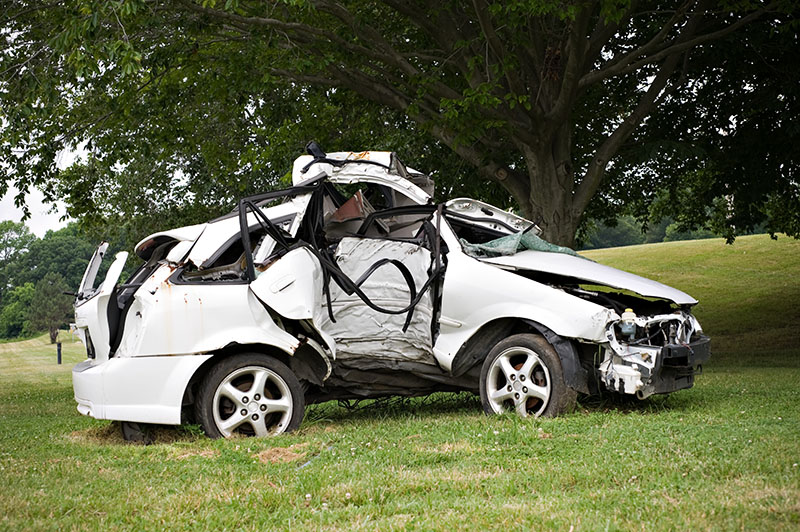
- A fatal crash is investigated differently from an injury crash: HPD or the Sheriff's vehicular crimes unit attends, the scene is held longer, and a reconstruction is usually performed.
- The Harris County Institute of Forensic Sciences conducts the autopsy. That report is evidence in your case and is not released to families automatically.
- The vehicles are evidence. Insurers move to release, repair or salvage them within days — once that happens, the event data recorder and the crush evidence are gone.
- A criminal prosecution may follow, and it runs on its own timetable. It does not pause your two-year deadline, which runs from the date of death (§ 16.003(b)).
- For who may bring the claim and what each one covers, see our wrongful death page — this page is about the crash investigation itself.
Houston wrongful death claims: key facts
| Fact | Answer |
|---|---|
| Law firm | Maida Law Firm — Houston personal-injury firm |
| Practice on this page | Houston Wrongful Death Claims |
| Area served | Houston and the surrounding communities listed under Areas We Serve |
| Office | 8313 Southwest Fwy Ste 102, Houston, TX 77074 · (713) 785-9484 |
| Author | Sam A. Maida, Jr. — Texas Bar No. 00787950 |
| Reviewer | Bernard G. Johnson III — Texas Bar No. 00796832 |
| Consultation and fee | Free Consultation; Contingency Fee — no attorney’s fee unless there is a recovery |
| Google rating | 4.9 stars from 368 reviews (Google, 21 September 2026) |
| Deadline to file | Two years from the day the cause of action accrues — Tex. Civ. Prac. & Rem. Code § 16.003(a) |
What exists after a fatal crash, and who holds it
| Evidence | Where it sits | Why it matters |
|---|---|---|
| Crash report and reconstruction | The investigating agency — HPD inside city limits, Harris County Sheriff's Office outside | Establishes the officer's findings, contributing-factor codes and any measurements taken |
| Autopsy and toxicology | Harris County Institute of Forensic Sciences | Cause and manner of death, and evidence relevant to both liability and the survival claim |
| Event data recorder | Inside each vehicle, until it is repaired or scrapped | Speed, braking, throttle and restraint use in the seconds before impact |
| Body and dash camera footage | The investigating agency | The scene as found, and statements made at the time |
| Roadside and business camera footage | Private owners near the scene | Usually the only neutral record of the sequence — and typically overwritten within days |
| The vehicles themselves | Wherever the insurer moved them | Crush pattern and restraint performance; lost permanently once salvaged |
Everything in this table except the autopsy is perishable, and the autopsy is the one item that cannot be hurried. That asymmetry is why preservation comes before anything else.
Deadlines that can end this claim
| Situation | Deadline | Source |
|---|---|---|
| Most injury lawsuits | Two years from the day the cause of action accrues. | Tex. Civ. Prac. & Rem. Code § 16.003(a) |
| An injury that causes death | Two years, running from the date of death. | Tex. Civ. Prac. & Rem. Code § 16.003(b) |
| A City of Houston, Harris County, METRO or state vehicle | Notice to the governmental unit not later than six months after the incident, describing the injury, the time and place, and the incident — and a city charter can require it sooner. | Tex. Civ. Prac. & Rem. Code § 101.101 |
| Reporting the crash itself | Immediately, by the quickest means of communication, if anyone was injured or killed or a vehicle cannot be driven normally and safely. | Tex. Transp. Code § 550.026(a) |
| If you were partly at fault | No deadline, but a hard bar: a claimant may not recover if their percentage of responsibility is greater than 50 percent. | Tex. Civ. Prac. & Rem. Code § 33.001 |
Questions people ask after a Houston crash
Tap a question to open it.
What actually happens in the hours after a fatal Houston crash?
The scene is held far longer than for an injury crash. A specialist unit attends — vehicular crimes for HPD inside the city, or the Harris County Sheriff's Office equivalent outside it — and a reconstruction is normally performed, with measurements, photographs and sometimes drone or laser scanning. The medical examiner takes jurisdiction over the deceased. Vehicles are towed and held while the investigation proceeds, then released. That release is the moment families need to know about, because it starts the clock on the physical evidence disappearing.
Who conducts the autopsy and how do we get the report?
The Harris County Institute of Forensic Sciences. The report establishes cause and manner of death and includes toxicology, and it is evidence in both the liability question and the survival claim, where any period of conscious suffering before death matters. It is not released to families automatically or immediately — reports commonly take weeks to months to finalise, and there is a formal request process. That delay is normal, but it should not be allowed to hold up the steps that are time-critical, which are all on the evidence side.
What should a family do in the first week?
Very little of what the law requires, and one thing that matters enormously. Ask, in writing, that the vehicles be preserved and not released for repair or salvage, and that any camera footage near the scene be preserved. That single step protects the event data recorders and the crush evidence, and it is the one thing that cannot be done later. Beyond that: obtain the crash report number, note the investigating agency, keep any correspondence from insurers, and do not give a recorded statement to the other side while arranging a funeral.
What is accident reconstruction and do we need our own?
It is the analysis that turns physical evidence into a sequence — using crush profiles, debris distribution, final rest positions, roadway evidence and electronic data to establish speeds, angles and timing. The investigating agency usually performs one in a fatal case, and it is a useful starting point. An independent reconstruction is often warranted because the agency's analysis is directed at whether a crime occurred rather than at civil liability, and because it may not have examined the questions that matter to apportionment under § 33.001.
Where do the vehicles go, and why does it matter so much?
To a police hold or a tow yard, then to whichever insurer takes possession, then to repair or salvage. Once a vehicle is salvaged the event data recorder, the restraint components and the crush evidence are gone, and no amount of later effort recovers them. Insurers act quickly for entirely ordinary commercial reasons. A written preservation demand naming the specific vehicles by VIN, sent to the insurers and to the tow yard, is what converts routine disposal into a decision someone must justify.
When does the two-year deadline start after a death?
From the date of death, under § 16.003(b) — not from the date of the crash. Where someone survives for a period before dying, those are different dates and the later one governs. A separate and much shorter deadline applies if a governmental vehicle or employee was involved: § 101.101 requires notice within six months, and a city charter can require it sooner. Section 71.004(c) adds another timing rule, requiring the executor or administrator to bring the action if no entitled family member has begun it within three calendar months.
When will the criminal case be resolved, and should we wait?
It can take well over two years, and no, waiting is not safe. A prosecution for intoxication manslaughter or criminally negligent homicide runs on the court's schedule and the State's priorities, and nothing about it pauses your civil deadline. The two proceedings also ask different questions to different standards. The practical approach is to begin the civil claim on its own timetable while the criminal case proceeds, using what its investigation produces where that becomes available.
Why do insurers contact families so quickly after a fatal crash?
Because the period immediately after a death is when a family is least able to evaluate anything, and because early resolution limits exposure. An offer made in the first weeks is made before the autopsy is complete, before the reconstruction is finished, and before anyone knows what insurance is actually available across all potential defendants. Accepting it is irreversible. There is no obligation to give the other side a recorded statement, and there is no advantage to doing so while arranging a funeral.
Why might more than one party be responsible?
Because fatal crashes frequently involve factors beyond a single driver. If a commercial vehicle is involved, the motor carrier comes in alongside the driver, under the federal safety rules Texas adopts by § 644.051. If the driver was working, their employer may be vicariously liable. If a vehicle component failed or a restraint did not perform, Chapter 82 supplies a products claim, where a design defect requires proof of a safer alternative design under § 82.005(a). If alcohol was served, a dram shop claim may lie under § 2.02(b). Each has separate insurance.
How does this page differ from your wrongful death page?
This one is about the investigation — what evidence exists after a fatal crash, who holds it, how quickly it disappears, and what a family should do first. The wrongful death page covers the legal framework: that Texas gives two separate claims, that the wrongful death claim under § 71.002 is for the exclusive benefit of the surviving spouse, children and parents under § 71.004(a), and that the survival claim under § 71.021 belongs to the estate. Most families need both, and they need this one first.
4.9 out of 5 from 368 Google reviews. Read them on Google.
★★★★★
Hi, I would recommend their services they were very helpful in handling and resolving my case. I received great medical care on their behalf and I was taken care of as a client by Mr. Gabriel he went above and beyond to ensure I didn't settle for less than I was owed.
★★★★★
Maida law firm was great. They have amazing communication. The staff was also very friendly and professional. The process was fast and they are very reliable. I will definitely be recommending them to all my friends and family. Thank you so much Maida Law Firm.
Reviews are the opinions of the clients who wrote them. Past results do not guarantee or predict a similar outcome in any future case.
After a crash in southwest Houston
Our office is on the Southwest Freeway, and the crashes we see from this side of Houston cluster on the same few roads. These are the emergency rooms, stations and the courthouse involved most often.
| What | Where |
|---|---|
| Main freeways | Southwest Freeway (I-69/US 59) · Sam Houston Tollway / Beltway 8 · Westpark Tollway · US 90 Alternate |
| Nearest emergency rooms | HCA Houston ER 24/7 - Westchase — 11103 Westheimer Rd, Houston |
| Memorial Hermann Southwest Hospital Emergency Center — 7600 Beechnut St, Houston | |
| Emergency Room at HCA Houston West — 12141 Richmond Ave, Houston | |
| HCA Houston ER 24/7 - Bellaire — 5413 S Rice Ave, Houston | |
| Post Oak ER - Emergency Room and Urgent ER Care — 5018 San Felipe St, Houston | |
| Police stations | Houston Police Department Westside — 3203 S Dairy Ashford Rd, Houston |
| Houston Police Department South Gessner — 8605 Westplace Dr, Houston | |
| Houston Police Department Southwest Substation — 13097 Nitida St, Houston | |
| City of Southside Place Police Department — 6309 Edloe St, Houston | |
| Where suit is filed | Harris County Civil Courthouse — 201 Caroline St, Houston, TX 77002 |
Emergency rooms and stations from Google Places within about 9 km of our office; freeways from OpenStreetMap; courthouse confirmed in the county seat. Verified 28 August 2026. Go to the nearest ER in an emergency — this list is for orientation, not medical advice.
Recent Houston-area crashes of this kind
Each incident is linked to the news outlet that reported it, newest first. We were not involved in these cases, describe them only as published and do not assess who was at fault.
- 18-wheeler and car collide on I-10 near Eldridge ABC13 / KTRK, July 2026
- Driver charged with intoxication manslaughter after a Southwest Freeway crash ABC13 / KTRK, July 2026
- Pedestrian struck by at least three vehicles on the North Freeway FOX 26 Houston, March 2026
Related Houston claims we handle
Video: Maida Law Firm: Personal Injury Lawyers in Houston, TX
An introduction to Maida Law Firm, the Houston personal injury firm Sam A. Maida, Jr. founded in 1993. Watch on YouTube
Where we are in Houston
Maida Law Firm
8313 Southwest Fwy Ste 102, Houston, TX 77074
We are on the Southwest Freeway, minutes from the 610 Loop and Sharpstown, and we see clients from across Harris County.
Read our 368 Google reviews (4.9 out of 5) · View our Google Business Profile
About the authors
Sam A. Maida, Jr.
Owner and Managing Attorney
Sam A. Maida, Jr. has represented injured Texans in the greater Houston area since the firm opened in 1993.
State Bar of TexasAvvoMartindale-HubbellLawLinkThatCarHitMeLinkedIn

Bernard G. Johnson III
Litigation Managing Attorney
Bernard G. Johnson III is a board certified trial lawyer licensed in Texas since 1996 and a graduate of South Texas College of Law.