The short version
- The crash that hurts most Houston riders is a car turning left across their path or changing lanes into them. Texas § 545.152 requires a left-turning driver to yield to oncoming traffic that is in the intersection or close enough to be an immediate hazard.
- Lane discipline is statutory: a driver must stay as nearly as practical entirely within a single lane and may not move out of it unless the movement can be made safely (§ 545.060(a)).
- Texas helmet law is not a blanket requirement. It is an exception under § 661.003(c) if the rider is at least 21 and has either completed a motorcycle operator training course or is covered by a health insurance plan — and an officer may not stop a rider solely to check (§ 661.003(c-1)).
- Harris County recorded 115,173 crashes in 2024, including 546 fatal crashes and 2,282 suspected-serious-injury crashes. Source: TxDOT, Crashes and Injuries by County 2024.
- Two years to file (§ 16.003), and recovery is barred entirely above 50% responsibility (§ 33.001) — which is exactly the percentage the other insurer will try to build against a rider.
Houston motorcycle accident claims: key facts
| Fact | Answer |
|---|---|
| Law firm | Maida Law Firm — Houston personal-injury firm |
| Practice on this page | Houston Motorcycle Accident Claims |
| Area served | Houston and the surrounding communities listed under Areas We Serve |
| Office | 8313 Southwest Fwy Ste 102, Houston, TX 77074 · (713) 785-9484 |
| Author | Sam A. Maida, Jr. — Texas Bar No. 00787950 |
| Reviewer | Bernard G. Johnson III — Texas Bar No. 00796832 |
| Consultation and fee | Free Consultation; Contingency Fee — no attorney’s fee unless there is a recovery |
| Google rating | 4.9 stars from 365 reviews (Google, 21 September 2026) |
| Deadline to file | Two years from the day the cause of action accrues — Tex. Civ. Prac. & Rem. Code § 16.003(a) |
The Texas rules that decide most motorcycle claims
| Situation | What Texas law requires | Source |
|---|---|---|
| A car turns left across your path | Must yield to a vehicle approaching from the opposite direction that is in the intersection or "in such proximity to the intersection as to be an immediate hazard." | Tex. Transp. Code § 545.152 |
| A car drifts or merges into you | Must drive "as nearly as practical entirely within a single lane" and may not leave it "unless that movement can be made safely." | Tex. Transp. Code § 545.060(a) |
| Merging on a multi-lane road | A driver entering a lane from the right must yield to a vehicle entering the same lane from the left. | Tex. Transp. Code § 545.061 |
| A car follows you too closely | Must keep an assured clear distance sufficient to stop safely without colliding. | Tex. Transp. Code § 545.062(a) |
| Helmets | An offence to ride without approved headgear, subject to the exception for riders 21 or over who completed a training course or carry a qualifying health insurance plan. Penalty is a fine of $10 to $50. | Tex. Transp. Code § 661.003 |
⚠ The subsections of § 661.003 that once addressed the use of helmet evidence were repealed in 2009. Whether helmet use affects a particular damages claim is a legal question for your attorney on your facts — this page does not answer it either way.
Deadlines that can end this claim
| Situation | Deadline | Source |
|---|---|---|
| Most injury lawsuits | Two years from the day the cause of action accrues. | Tex. Civ. Prac. & Rem. Code § 16.003(a) |
| An injury that causes death | Two years, running from the date of death. | Tex. Civ. Prac. & Rem. Code § 16.003(b) |
| A City of Houston, Harris County, METRO or state vehicle | Written notice to the governmental unit not later than six months after the incident, describing the injury, the time and place, and the incident — and a city charter can require it sooner. | Tex. Civ. Prac. & Rem. Code § 101.101 |
| Reporting the crash itself | Immediately, by the quickest means of communication, if anyone was injured or killed or a vehicle cannot be driven normally and safely. | Tex. Transp. Code § 550.026(a) |
| If you were partly at fault | No deadline, but a hard bar: a claimant may not recover if their percentage of responsibility is greater than 50 percent. | Tex. Civ. Prac. & Rem. Code § 33.001 |
Questions people ask after a Houston crash
Tap a question to open it.
Who is usually at fault when a car turns left in front of a motorcycle?
Most often the turning driver, because § 545.152 puts the duty on them: turning left, they must yield to any vehicle approaching from the opposite direction that is already in the intersection or close enough to be an immediate hazard. The recurring defence is that the rider was speeding or "came out of nowhere," which is really an argument about the rider's closing speed and conspicuity. It is answered with physical evidence — the point of impact, the damage geometry, throw distance, and any camera footage — rather than with competing accounts. On Houston arterials with permissive green-ball left turns, signal phase data frequently settles the sequence.
Who pays if the driver who hit me had only minimum insurance?
That is a common and serious problem for riders, because motorcycle injuries are disproportionately severe while the at-fault driver may carry only the Texas statutory minimum of $30,000 per person. Where their limits are exhausted, the next source is your own underinsured motorist coverage; where they had no insurance or were never identified, uninsured motorist coverage applies. Texas requires insurers to offer UM/UIM and it can only be omitted if a named insured rejected it in writing (§ 1952.101). If your declarations page does not show it, ask the insurer to produce that written rejection before accepting that you have none.
What does Texas actually require about helmets?
Section 661.003 makes it an offence to ride or carry a passenger without approved protective headgear, but subsection (c) creates an exception where the person required to wear it is at least 21 and has either completed a motorcycle operator training and safety course under Chapter 662 or is covered by a health insurance plan providing medical benefits for injuries from a motorcycle collision. Subsection (c-1) goes further: an officer may not stop or detain a rider for the sole purpose of checking. The offence itself is a misdemeanour punishable by a fine of not less than $10 and not more than $50.
What if I was not wearing a helmet — does that end my claim?
No, and anyone who tells you the answer is simple in either direction is overstating it. The provisions of § 661.003 that once dealt with how helmet evidence could be used were repealed in 2009, so the position is not settled by a single sentence of the statute, and it interacts with proportionate responsibility under § 33.001 and with which injuries are actually attributable to the absence of a helmet. This is genuinely a question for an attorney applying current law to your facts and your injuries, and we would rather tell you that than give you a confident answer that is wrong.
What makes a motorcycle injury claim different from a car claim?
The injuries and the prejudice. Riders have no crush structure, no airbags and no restraint, so the same impact that bruises a driver produces fractures, degloving, road rash requiring grafts, or traumatic brain injury. That pushes the case toward future medical care and lost earning capacity as the largest components. Then there is the attitude problem: adjusters and jurors carry assumptions about riders being reckless, which is why documenting your lane position, speed, lighting and gear matters more than it should. Neither factor changes the law; both change how the claim has to be built.
Where do Houston motorcycle crashes tend to happen?
On the big multi-lane arterials and the freeway interchanges, because that is where turning movements and lane changes concentrate. Westheimer, Bissonnet, Richmond, Gessner and FM 1960 combine heavy traffic with frequent permissive left turns and constant lane changing. The freeway system — the Southwest Freeway (I-69/US 59), I-10, I-45, Beltway 8 and the Sam Houston Tollway — adds high closing speeds and merge conflicts, and ramps in particular are unforgiving to a two-wheeled vehicle. Where the crash happened decides which agency investigated, and therefore where the CR-3 crash report and any body-camera footage are held.
Where do I get the crash report and any footage?
The CR-3 crash report is filed electronically with TxDOT and can be purchased through its Crash Records Information System; a crash worked by the Houston Police Department can also be requested from HPD Records once processed, while an unincorporated-area crash sits with the Harris County Sheriff's Office. Footage is the more urgent item. Business and residential camera systems near the intersection typically overwrite within days to a fortnight, and in a motorcycle case that footage is often the only neutral record of lane position and closing speed. A written preservation request in the first week is the practical priority.
When should I get medical treatment if I feel able to ride away?
The same day, and this matters more for riders than for anyone else. Adrenaline masks injury at the scene, and the two injury types that most often present late — closed-head injury and internal bleeding — are precisely the ones where delay is dangerous rather than merely inconvenient. There is also a claims consequence: a gap between the crash and the first medical record is the argument an adjuster uses to attribute the injury to something else. Southwest Houston has several emergency departments close to the freeway system, including Memorial Hermann Southwest on Beechnut and the HCA facilities on Westheimer and South Rice.
When does my deadline to sue expire?
Two years from the day the cause of action accrues under § 16.003(a), which is normally the crash date; if the injury causes death, § 16.003(b) runs two years from the date of death. The shorter deadline to watch is governmental: if a City of Houston, Harris County, METRO or state vehicle was involved, § 101.101 requires written notice within six months describing the injury, the time and place, and the incident — and a city charter may shorten that further. For a rider facing months of surgery and rehabilitation, six months arrives while treatment is still under way.
Why does the insurer assume the rider was speeding?
Partly because it is the cheapest available defence and partly because proportionate responsibility rewards it: under § 33.001 every percentage point assigned to you reduces the recovery, and above 50% it disappears altogether. Speed is also hard for a witness to estimate accurately for a motorcycle, which makes the assertion easy to make and awkward to disprove by testimony alone. It is met with physical evidence instead — scene measurements, damage geometry, throw distance, and where available the event data recorder in the other vehicle, which frequently records its own pre-impact speed and braking.
Why is conspicuity such a big issue in these cases?
Because the defence in a lane-change or left-turn case is usually "I never saw the motorcycle," and the argument that follows is that the rider should have been more visible. Texas law does not place a general visibility duty on riders — the duties in § 545.152 and § 545.060 sit on the driver who turns or changes lanes — but conspicuity evidence still shapes how a jury apportions responsibility. Headlight use, lane position within the lane, and gear are all worth documenting early, along with sight lines at the location, which can show that the driver had an unobstructed view and simply did not look.
How is fault proved when the driver says the rider appeared suddenly?
By reconstructing the geometry rather than debating the recollection. Sight-line analysis at the location establishes when the rider entered the driver's field of view. The point of impact on both vehicles indicates the angle and relative speed. Throw distance and final rest positions constrain the speeds involved. The other vehicle's event data recorder often supplies its own pre-impact speed, braking and steering. Signal phase data settles who had the movement at an intersection. Independent witnesses matter and the CR-3 lists them — but the physical evidence is what holds up when two accounts conflict.
How much is a Houston motorcycle accident case worth?
It depends on facts nobody can assess before reading your records, and any number offered earlier is a guess. The drivers of value are the medical evidence and whether treatment has concluded, documented lost income and future earning capacity, the permanence of any impairment, the insurance actually available on the other side, and your own share of responsibility under § 33.001. Because motorcycle injuries are frequently permanent, future care and work capacity often dominate the calculation, and those require expert proof rather than an estimate. The limits available on the other side are the practical ceiling.
How do I protect my claim in the first week?
Get treated and keep treating, because gaps hurt more than anything else in the file. Report the crash — § 550.026(a) requires immediate notice where there is injury or a vehicle that cannot be driven safely. Photograph both vehicles before repair and keep the damaged helmet and gear, which are evidence of impact forces and should not be discarded. Identify cameras at the location and ask in writing that the footage be preserved. Decline to give the other driver's insurer a recorded statement until you have advice; your own insurer is different, since your policy contains a cooperation clause.
4.9 out of 5 from 365 Google reviews. Read them on Google.
★★★★★
Hi, I would recommend their services they were very helpful in handling and resolving my case. I received great medical care on their behalf and I was taken care of as a client by Mr. Gabriel he went above and beyond to ensure I didn't settle for less than I was owed.
★★★★★
Maida law firm was great. They have amazing communication. The staff was also very friendly and professional. The process was fast and they are very reliable. I will definitely be recommending them to all my friends and family. Thank you so much Maida Law Firm.
Reviews are the opinions of the clients who wrote them. Past results do not guarantee or predict a similar outcome in any future case.
Everything we publish on this topic
This page is the hub for houston motorcycle accident claims. Below is every guide, explainer and case note on the site that belongs to it, so you can go straight to the situation that matches yours.
- After a Motorcycle Accident With a Car in Texas: Proof, Insurance and Deadlines
- Motorcycle Accident in Bellaire, Texas: Helmet Law, Lane Rules and Your Claim
- Motorcycle Accident Lawyer
- Most Common Causes of Accidents Involving Motorcycles
- Motorcycle Accident Houston: Rights, Bias & How to Win
- What To Do
6 related pages.
After a crash in southwest Houston
Our office is on the Southwest Freeway, and the crashes we see from this side of Houston cluster on the same few roads. These are the emergency rooms, stations and the courthouse involved most often.
| What | Where |
|---|---|
| Main freeways | Southwest Freeway (I-69/US 59) · Sam Houston Tollway / Beltway 8 · Westpark Tollway · US 90 Alternate |
| Nearest emergency rooms | HCA Houston ER 24/7 - Westchase — 11103 Westheimer Rd, Houston |
| Memorial Hermann Southwest Hospital Emergency Center — 7600 Beechnut St, Houston | |
| Emergency Room at HCA Houston West — 12141 Richmond Ave, Houston | |
| HCA Houston ER 24/7 - Bellaire — 5413 S Rice Ave, Houston | |
| Post Oak ER - Emergency Room and Urgent ER Care — 5018 San Felipe St, Houston | |
| Police stations | Houston Police Department Westside — 3203 S Dairy Ashford Rd, Houston |
| Houston Police Department South Gessner — 8605 Westplace Dr, Houston | |
| Houston Police Department Southwest Substation — 13097 Nitida St, Houston | |
| City of Southside Place Police Department — 6309 Edloe St, Houston | |
| Where suit is filed | Harris County Civil Courthouse — 201 Caroline St, Houston, TX 77002 |
Emergency rooms and stations from Google Places within about 9 km of our office; freeways from OpenStreetMap; courthouse confirmed in the county seat. Verified 28 August 2026. Go to the nearest ER in an emergency — this list is for orientation, not medical advice.
Recent Houston-area crashes of this kind
Each incident is linked to the news outlet that reported it, newest first. We were not involved in these cases, describe them only as published and do not assess who was at fault.
- Motorcyclist killed on Westheimer Road after an abrupt lane change FOX 26 Houston, June 2026
- Motorcyclist dies on an I-45 ramp near US 59 downtown FOX 26 Houston, August 2026
- Motorcyclist killed at Almeda Road and Hepburn Street KPRC 2 / Click2Houston, March 2026
Related Houston claims we handle
Where we are in Houston
Maida Law Firm
8313 Southwest Fwy Ste 102, Houston, TX 77074
We are on the Southwest Freeway, minutes from the 610 Loop and Sharpstown, and we see clients from across Harris County.
About the authors
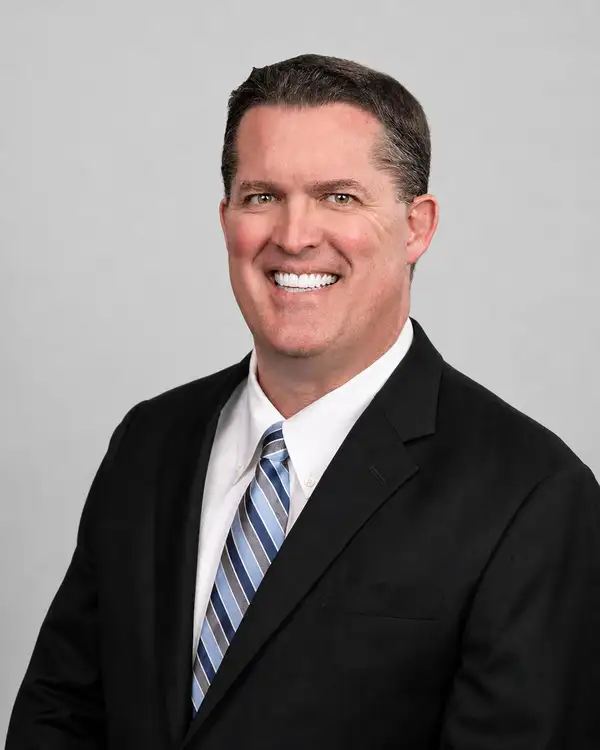
Sam A. Maida, Jr.
Owner and Managing Attorney
Sam A. Maida, Jr. has represented injured Texans in the greater Houston area since the firm opened in 1993.
State Bar of TexasAvvoMartindale-HubbellLawLinkThatCarHitMeLinkedIn

Bernard G. Johnson III
Litigation Managing Attorney
Bernard G. Johnson III is a board certified trial lawyer licensed in Texas since 1996 and a graduate of South Texas College of Law.