The short version
- This page answers one question: who actually pays. For how the claim itself works, see our Houston car accident page.
- Texas is a fault state, but the at-fault insurer generally pays once, at settlement — not as your bills arrive. That gap is what catches people.
- The minimum they must carry is $30,000 per person / $60,000 per crash / $25,000 property (§ 601.072). A serious injury exceeds it routinely.
- Your own UM/UIM fills that gap, and Texas requires insurers to provide it unless a named insured rejected it in writing (§ 1952.101(b)-(c)) — ask for that signed rejection before accepting you have none.
- ⚠ Your settlement and your cheque are different numbers. Health insurers, Medicare and providers can assert liens that are resolved before you are paid.
Houston car accident claims: key facts
| Fact | Answer |
|---|---|
| Law firm | Maida Law Firm — Houston personal-injury firm |
| Practice on this page | Houston Car Accident Claims |
| Area served | Houston and the surrounding communities listed under Areas We Serve |
| Office | 8313 Southwest Fwy Ste 102, Houston, TX 77074 · (713) 785-9484 |
| Author | Sam A. Maida, Jr. — Texas Bar No. 00787950 |
| Reviewer | Bernard G. Johnson III — Texas Bar No. 00796832 |
| Consultation and fee | Free Consultation; Contingency Fee — no attorney’s fee unless there is a recovery |
| Google rating | 4.9 stars from 368 reviews (Google, 21 September 2026) |
| Deadline to file | Two years from the day the cause of action accrues — Tex. Civ. Prac. & Rem. Code § 16.003(a) |
Who pays after a Houston auto accident?
| Source | What it covers | Note |
|---|---|---|
| At-fault driver's liability cover | Your injuries and property damage, up to their limits | Usually paid once, at settlement — not as bills arrive |
| Your PIP or medical payments cover | Medical bills and some lost income, regardless of fault | Pays early, which is its whole value |
| Your health insurance | Treatment | May assert a lien or subrogation claim against the recovery |
| Your UM cover | Where the at-fault driver had none, or was never identified | Required to be offered unless rejected in writing (§ 1952.101(b)-(c)) |
| Your UIM cover | Where their limits are exhausted but your loss is greater | Claim is against your own insurer |
| Your collision cover | Vehicle repair regardless of fault | Deductible usually recovered later if the other side pays |
| An employer's policy | Where the at-fault driver was working | Commercial limits are typically far above the $30,000 minimum |
Mapping every layer before making a claim on any one of them is the single most valuable early step, because the order in which they are pursued affects what you keep.
Deadlines that can end this claim
| Situation | Deadline | Source |
|---|---|---|
| Most injury lawsuits | Two years from the day the cause of action accrues. | Tex. Civ. Prac. & Rem. Code § 16.003(a) |
| An injury that causes death | Two years, running from the date of death. | Tex. Civ. Prac. & Rem. Code § 16.003(b) |
| A City of Houston, Harris County, METRO or state vehicle | Notice to the governmental unit not later than six months after the incident, describing the injury, the time and place, and the incident — and a city charter can require it sooner. | Tex. Civ. Prac. & Rem. Code § 101.101 |
| Reporting the crash itself | Immediately, by the quickest means of communication, if anyone was injured or killed or a vehicle cannot be driven normally and safely. | Tex. Transp. Code § 550.026(a) |
| If you were partly at fault | No deadline, but a hard bar: a claimant may not recover if their percentage of responsibility is greater than 50 percent. | Tex. Civ. Prac. & Rem. Code § 33.001 |
Questions people ask after a Houston crash
Tap a question to open it.
Who pays my medical bills while the case is still open?
Rarely the at-fault driver, and that surprises almost everyone. Their liability insurer normally pays a single sum at settlement rather than paying providers as invoices arrive. In the meantime the sources are your own personal injury protection or medical payments cover, which pays early and is the reason it is worth carrying; your health insurance; and sometimes a letter of protection under which a provider treats you and waits to be paid from the recovery. Keep every bill and every explanation of benefits, because those documents become the basis of both your claim and the lien negotiation later.
Who pays to fix or replace my car?
Either the at-fault driver's property damage cover, up to the $25,000 Texas minimum under § 601.072, or your own collision cover if you carry it. Using your own is often faster, and your deductible is usually recovered later if the other insurer accepts responsibility. Rental cover is a separate question and is frequently the practical problem, because repairs take longer than the rental allowance. If the vehicle is a total loss, the argument is about actual cash value, and independent valuation evidence is worth having before accepting a figure.
What is a lien and why is my cheque smaller than the settlement?
Because several parties may have a right to be reimbursed from the recovery before you are paid. A health insurer that paid for your treatment may assert subrogation. Medicare and Medicaid have statutory recovery rights. Hospitals and providers can assert liens. Those amounts are identified, verified and frequently negotiated down before disbursement, which is part of the work rather than an afterthought. A settlement figure quoted without reference to liens is not the number you will receive, and any firm should explain that distinction at the outset.
What if the at-fault driver had no insurance at all?
Then your own uninsured motorist coverage is the claim. Texas requires insurers to provide UM and UIM in at least the Chapter 601 limits unless a named insured rejected it in writing under § 1952.101(b)-(c), so if your declarations page does not show it, ask the insurer to produce that signed rejection — it is a document they must be able to produce. Be aware that a UM claim is made against your own insurer, which then stands in the absent driver's shoes and is entitled to contest liability and damages exactly as that driver could have.
What is underinsured motorist cover and when does it apply?
It applies where the at-fault driver had insurance but not enough — their limits are exhausted and your loss is greater. It is the layer that matters most in serious injury cases, because $30,000 per person does not go far against surgery and lost income. UIM claims usually cannot be settled without following the policy's own procedures, including notifying your insurer before accepting a settlement from the other side, since accepting first can prejudice the UIM claim. That sequencing is a genuine trap and it is worth advice before, not after.
Where does an employer's insurance come in?
Whenever the at-fault driver was acting in the course and scope of employment, which changes the ceiling entirely. Commercial policies are typically far above the statutory minimum, and there may be additional claims against the employer for hiring, training, supervision or maintenance. Where a tractor-trailer is involved, the federal motor carrier rules Texas adopts under § 644.051 add a documentary layer as well. Establishing what the driver was doing at the time of the crash is therefore one of the highest-value early questions.
When should I use my own coverage rather than wait?
Usually straight away for medical payments, PIP and collision, because they pay early and waiting achieves nothing. The common worry is that claiming on your own policy will raise your premium after a crash you did not cause; that is a question for your policy and your carrier, but the alternative is often months without treatment funding. What does require care is UIM, where accepting a settlement from the at-fault insurer without notifying your own carrier first can prejudice the claim.
When does the money actually arrive?
After treatment concludes, the claim is negotiated or tried, and the liens are resolved — in that order. A claim should not settle before you reach maximum medical improvement, because settlement is final and cannot be reopened if the injury proves worse than expected. Once a settlement is reached, the disbursement timeline depends on how quickly lien holders respond, which is frequently the slowest part and is largely outside anyone's control.
Why does the insurer offer so little at the start?
Because an early offer is made before anyone knows what the claim is worth, which is precisely its advantage to them. At that point your treatment is incomplete, the medical records are partial, and the future care question is unanswered. The offer looks reasonable against the bills received so far and is final in every sense. There is no obligation to respond quickly, and the passage of time before maximum medical improvement generally helps the accuracy of the valuation rather than harming the claim.
How is this different from your main car accident page?
That page covers the claim — fault, evidence, deadlines and how a case is built. This one covers the money: which policies respond, in what order, what gets deducted before you are paid, and where the coverage runs out. Most people need both, but the questions that keep them awake in the first month are usually the ones on this page.
4.9 out of 5 from 368 Google reviews. Read them on Google.
★★★★★
Hi, I would recommend their services they were very helpful in handling and resolving my case. I received great medical care on their behalf and I was taken care of as a client by Mr. Gabriel he went above and beyond to ensure I didn't settle for less than I was owed.
★★★★★
Maida law firm was great. They have amazing communication. The staff was also very friendly and professional. The process was fast and they are very reliable. I will definitely be recommending them to all my friends and family. Thank you so much Maida Law Firm.
Reviews are the opinions of the clients who wrote them. Past results do not guarantee or predict a similar outcome in any future case.
After a crash in southwest Houston
Our office is on the Southwest Freeway, and the crashes we see from this side of Houston cluster on the same few roads. These are the emergency rooms, stations and the courthouse involved most often.
| What | Where |
|---|---|
| Main freeways | Southwest Freeway (I-69/US 59) · Sam Houston Tollway / Beltway 8 · Westpark Tollway · US 90 Alternate |
| Nearest emergency rooms | HCA Houston ER 24/7 - Westchase — 11103 Westheimer Rd, Houston |
| Memorial Hermann Southwest Hospital Emergency Center — 7600 Beechnut St, Houston | |
| Emergency Room at HCA Houston West — 12141 Richmond Ave, Houston | |
| HCA Houston ER 24/7 - Bellaire — 5413 S Rice Ave, Houston | |
| Post Oak ER - Emergency Room and Urgent ER Care — 5018 San Felipe St, Houston | |
| Police stations | Houston Police Department Westside — 3203 S Dairy Ashford Rd, Houston |
| Houston Police Department South Gessner — 8605 Westplace Dr, Houston | |
| Houston Police Department Southwest Substation — 13097 Nitida St, Houston | |
| City of Southside Place Police Department — 6309 Edloe St, Houston | |
| Where suit is filed | Harris County Civil Courthouse — 201 Caroline St, Houston, TX 77002 |
Emergency rooms and stations from Google Places within about 9 km of our office; freeways from OpenStreetMap; courthouse confirmed in the county seat. Verified 28 August 2026. Go to the nearest ER in an emergency — this list is for orientation, not medical advice.
Related Houston claims we handle
Video: Maida Law Firm: Personal Injury Lawyers in Houston, TX
An introduction to Maida Law Firm, the Houston personal injury firm Sam A. Maida, Jr. founded in 1993. Watch on YouTube
Where we are in Houston
Maida Law Firm
8313 Southwest Fwy Ste 102, Houston, TX 77074
We are on the Southwest Freeway, minutes from the 610 Loop and Sharpstown, and we see clients from across Harris County.
Read our 368 Google reviews (4.9 out of 5) · View our Google Business Profile
What results has Maida Law Firm recovered for injured clients?
Six published settlements from $1 million to $5.5 million, recovered by Maida Law Firm attorneys for Texans hurt in crashes with commercial trucks and company drivers. Five of the crashes happened in the Houston area. Each case page explains what happened, the injuries, and the evidence that proved the claim.
Past results do not guarantee a similar outcome. Every case is different and depends on its own facts.
Read every case, with the evidence that decided it, on our case results page.
About the authors
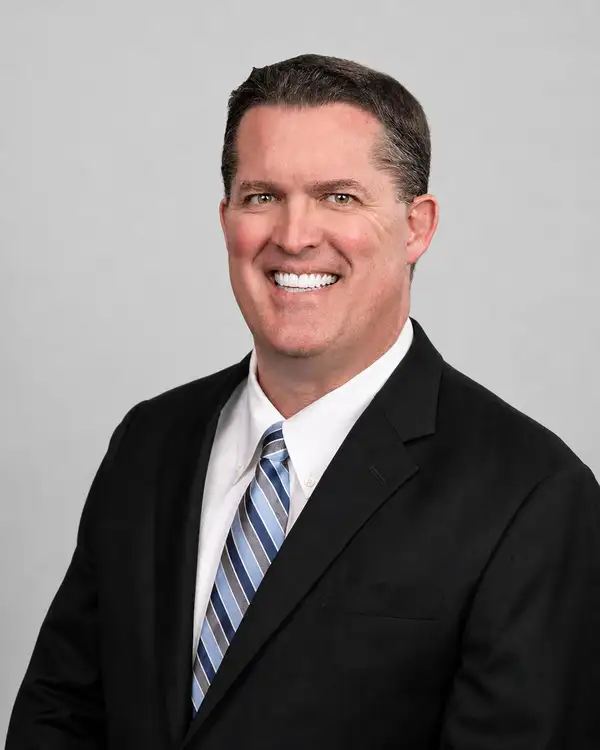
Sam A. Maida, Jr.
Owner and Managing Attorney
Sam A. Maida, Jr. has represented injured Texans in the greater Houston area since the firm opened in 1993.
State Bar of TexasAvvoMartindale-HubbellLawLinkThatCarHitMeLinkedIn

Bernard G. Johnson III
Litigation Managing Attorney
Bernard G. Johnson III is a board certified trial lawyer licensed in Texas since 1996 and a graduate of South Texas College of Law.