The short version
- A checklist, in order. For who to call see our companion page; for who pays, see the Houston auto accident attorney page.
- 1. Report it. § 550.026(a) requires immediate notice by the quickest means if anyone is injured or killed, or a vehicle cannot be driven normally and safely.
- 2. Exchange what the law requires — name, address, vehicle registration number and the name of their liability insurer; licence on request (§ 550.023).
- 3. Photograph before anything moves — both vehicles, final positions, the roadway, and any debris.
- 4. Get evaluated the same day, and 5. preserve the footage — business cameras near the scene overwrite within days.
Houston car accident claims: key facts
| Fact | Answer |
|---|---|
| Law firm | Maida Law Firm — Houston personal-injury firm |
| Practice on this page | Houston Car Accident Claims |
| Area served | Houston and the surrounding communities listed under Areas We Serve |
| Office | 8313 Southwest Fwy Ste 102, Houston, TX 77074 · (713) 785-9484 |
| Author | Sam A. Maida, Jr. — Texas Bar No. 00787950 |
| Reviewer | Bernard G. Johnson III — Texas Bar No. 00796832 |
| Consultation and fee | Free Consultation; Contingency Fee — no attorney’s fee unless there is a recovery |
| Google rating | 4.9 stars from 368 reviews (Google, 21 September 2026) |
| Deadline to file | Two years from the day the cause of action accrues — Tex. Civ. Prac. & Rem. Code § 16.003(a) |
The first 48 hours, in order
| Step | When | Why |
|---|---|---|
| Call 911 | Immediately | § 550.026(a) requires immediate notice where there is injury or a vehicle that cannot be driven safely |
| Exchange information | At the scene | § 550.023 requires name, address, registration number and the name of their liability insurer |
| Photograph everything | Before vehicles move | Final positions and damage geometry establish the sequence better than any account |
| Get witness details | At the scene | The crash report does not always list everyone present |
| Medical evaluation | Same day | A gap between the crash and the first medical record is the argument an adjuster makes |
| Preserve camera footage | Within days | Business and residential systems routinely overwrite within a week or two |
| Notify your own insurer | Promptly | Your policy contains a notice and cooperation clause |
| Decline the other insurer's recorded statement | Until advised | You are generally not obliged to give one |
Deadlines that can end this claim
| Situation | Deadline | Source |
|---|---|---|
| Most injury lawsuits | Two years from the day the cause of action accrues. | Tex. Civ. Prac. & Rem. Code § 16.003(a) |
| An injury that causes death | Two years, running from the date of death. | Tex. Civ. Prac. & Rem. Code § 16.003(b) |
| A City of Houston, Harris County, METRO or state vehicle | Notice to the governmental unit not later than six months after the incident, describing the injury, the time and place, and the incident — and a city charter can require it sooner. | Tex. Civ. Prac. & Rem. Code § 101.101 |
| Reporting the crash itself | Immediately, by the quickest means of communication, if anyone was injured or killed or a vehicle cannot be driven normally and safely. | Tex. Transp. Code § 550.026(a) |
| If you were partly at fault | No deadline, but a hard bar: a claimant may not recover if their percentage of responsibility is greater than 50 percent. | Tex. Civ. Prac. & Rem. Code § 33.001 |
Questions people ask after a Houston crash
Tap a question to open it.
What am I legally required to do at the scene?
Two things, and they are specific. Section 550.026(a) requires the operator of a vehicle in a collision resulting in injury, death, or damage leaving a vehicle unable to be driven normally and safely to give notice immediately, by the quickest means of communication, to the local police department if it happened in a municipality. Section 550.023 then requires giving your name, address, the registration number of the vehicle you were driving and the name of your motor vehicle liability insurer to anyone injured and to the other driver or occupant, showing your licence if requested, and providing reasonable assistance to anyone injured.
What should I photograph, and does it really matter?
It matters more than almost anything else you can do, because the scene stops existing within minutes. Photograph both vehicles from several angles including close-ups of the damage, the final resting positions before anything is moved, the roadway including any debris or fluid, the traffic controls and sight lines, the other driver's licence plate, and the interior of your own vehicle. Final positions and crush geometry establish the angle and sequence of impact far more reliably than two conflicting accounts recorded weeks later.
What if the other driver wants to settle without involving insurers?
Decline politely. It is common after a low-speed collision and it is almost always a bad idea. You do not yet know the extent of your injuries — soft-tissue and closed-head injuries commonly present a day or two later — and once you have accepted cash and left, you have no crash report, no exchange of insurance information, and no way to reopen it. It also removes the contemporaneous record that a collision occurred at all, which becomes the central problem if you later need to make any claim.
What if I feel fine at the scene?
Get evaluated the same day anyway. Adrenaline reliably masks injury for hours, and the two categories that most often present late — closed-head injury and internal injury — are the ones where delay is dangerous rather than merely inconvenient. There is also a claims consequence: the gap between the crash and your first medical record is the first thing an adjuster points to, and gaps between later appointments are used the same way. Attending once and then stopping is treated much like never attending.
Where do I get the crash report afterwards?
The CR-3 crash report is filed electronically with TxDOT and can be purchased through its Crash Records Information System. A crash investigated by the Houston Police Department can also be requested through HPD Records once processing is complete; a crash in unincorporated Harris County sits with the Sheriff's Office. The report matters because the officer records contributing-factor codes on it, and while those are neither binding nor always correct, they frame the adjuster's opening position — so an error is worth identifying in the first weeks.
When should I preserve camera footage, and how?
Within days, in writing, and specifically. Businesses and homes near the scene frequently have cameras covering the roadway, and those systems commonly overwrite within a week or two in the ordinary course. A written request identifying the date, the time window and the camera view is far harder to satisfy narrowly than a general request to preserve evidence. This is the step most often missed and the one that most often decides a disputed liability case, because it is the only neutral record of what happened.
When should I notify my own insurer?
Promptly, because your policy contains a notice and cooperation clause and a breach of it can affect coverage independently of the merits. That is a different situation from the other driver's insurer, to whom you generally owe nothing and to whom a recorded statement should not be given until you have advice. Working out which company is on the phone before answering questions is the single most useful precaution in the first fortnight, because the two calls sound identical and are not.
Why does the other insurer want a statement so quickly?
Because a statement taken in the first days is the most useful one they will ever get. Your treatment is incomplete, so anything you say about how you feel understates the injury; your recollection of the sequence is still forming, so any uncertainty becomes an admission. Ordinary polite answers — "I'm fine", "I didn't see them until the last second" — are quoted back months later, and they matter because § 33.001 reduces recovery by your share of responsibility and bars it entirely above 50 percent.
Why keep a record after the first week?
Because the damages case is built from continuity rather than from the crash. Keep a simple record of appointments, symptoms, days missed from work, and tasks you cannot do — it is far more accurate than reconstructing it a year later, and it is the material from which lost income and impact on daily life are proved. Keep every bill and explanation of benefits too, because those become the basis of both the claim and the lien negotiation that determines what you actually receive.
How does this page differ from your "who to call" page?
This one is the checklist of actions in order. The companion page is about the calls specifically — which number, in what order, what to say and what not to say, and which conversations you are obliged to have. Between them they cover the practical first days; the claim itself, and the question of who ultimately pays, are covered on the Houston car accident and auto accident attorney pages respectively.
4.9 out of 5 from 368 Google reviews. Read them on Google.
★★★★★
Hi, I would recommend their services they were very helpful in handling and resolving my case. I received great medical care on their behalf and I was taken care of as a client by Mr. Gabriel he went above and beyond to ensure I didn't settle for less than I was owed.
★★★★★
Maida law firm was great. They have amazing communication. The staff was also very friendly and professional. The process was fast and they are very reliable. I will definitely be recommending them to all my friends and family. Thank you so much Maida Law Firm.
Reviews are the opinions of the clients who wrote them. Past results do not guarantee or predict a similar outcome in any future case.
After a crash in southwest Houston
Our office is on the Southwest Freeway, and the crashes we see from this side of Houston cluster on the same few roads. These are the emergency rooms, stations and the courthouse involved most often.
| What | Where |
|---|---|
| Main freeways | Southwest Freeway (I-69/US 59) · Sam Houston Tollway / Beltway 8 · Westpark Tollway · US 90 Alternate |
| Nearest emergency rooms | HCA Houston ER 24/7 - Westchase — 11103 Westheimer Rd, Houston |
| Memorial Hermann Southwest Hospital Emergency Center — 7600 Beechnut St, Houston | |
| Emergency Room at HCA Houston West — 12141 Richmond Ave, Houston | |
| HCA Houston ER 24/7 - Bellaire — 5413 S Rice Ave, Houston | |
| Post Oak ER - Emergency Room and Urgent ER Care — 5018 San Felipe St, Houston | |
| Police stations | Houston Police Department Westside — 3203 S Dairy Ashford Rd, Houston |
| Houston Police Department South Gessner — 8605 Westplace Dr, Houston | |
| Houston Police Department Southwest Substation — 13097 Nitida St, Houston | |
| City of Southside Place Police Department — 6309 Edloe St, Houston | |
| Where suit is filed | Harris County Civil Courthouse — 201 Caroline St, Houston, TX 77002 |
Emergency rooms and stations from Google Places within about 9 km of our office; freeways from OpenStreetMap; courthouse confirmed in the county seat. Verified 28 August 2026. Go to the nearest ER in an emergency — this list is for orientation, not medical advice.
Related Houston claims we handle
Video: Maida Law Firm: Personal Injury Lawyers in Houston, TX
An introduction to Maida Law Firm, the Houston personal injury firm Sam A. Maida, Jr. founded in 1993. Watch on YouTube
Where we are in Houston
Maida Law Firm
8313 Southwest Fwy Ste 102, Houston, TX 77074
We are on the Southwest Freeway, minutes from the 610 Loop and Sharpstown, and we see clients from across Harris County.
Read our 368 Google reviews (4.9 out of 5) · View our Google Business Profile
What results has Maida Law Firm recovered for injured clients?
Seven published settlements from $1 million to $5.5 million, recovered by Maida Law Firm attorneys for Texans hurt in crashes with commercial trucks and company drivers. Six of the crashes happened in the Houston area. Each case page explains what happened, the injuries, and the evidence that proved the claim.
Past results do not guarantee a similar outcome. Every case is different and depends on its own facts.
Read every case, with the evidence that decided it, on our case results page.
About the authors
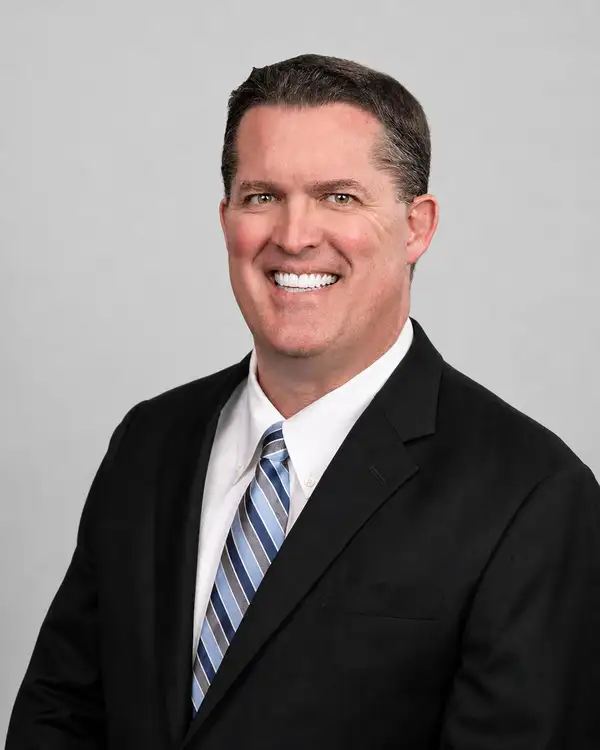
Sam A. Maida, Jr.
Owner and Managing Attorney
Sam A. Maida, Jr. has represented injured Texans in the greater Houston area since the firm opened in 1993.
State Bar of TexasAvvoMartindale-HubbellLawLinkThatCarHitMeLinkedIn

Bernard G. Johnson III
Litigation Managing Attorney
Bernard G. Johnson III is a board certified trial lawyer licensed in Texas since 1996 and a graduate of South Texas College of Law.