In a Texas car accident case, tort law mostly means negligence. A driver who owed another road user a legal duty, failed to use ordinary care and caused harm can be held responsible for the damages that follow. Texas then divides responsibility by percentage, and the injured person’s own share can reduce or bar recovery under chapter 33 of the Civil Practice and Remedies Code.
The short version
- Negligence is the core claim. Texas courts describe a negligence action as requiring a legal duty owed by one person to another.
- Breach is failing ordinary care. The Pattern Jury Charges define negligence as failing to do what a person of ordinary prudence would have done in the same circumstances.
- Causation has two parts. The negligence must be a substantial factor in causing the injury, and the injury must be foreseeable.
- Fault is a percentage. Above 50 percent responsibility, a claimant’s recovery is cut off; at 50 percent or less it is reduced by that share.
- Two years is the baseline. Section 16.003 starts a two-year period on accrual for most personal injury suits, with listed exceptions.
How does negligence fit into tort law?
In a car crash claim, negligence is the tort that matters most. It asks whether a driver owed a duty to others, whether that duty was breached, whether the breach caused the harm and how much responsibility each person bears. The sections below take those questions in order.
The Texas Supreme Court put the starting point plainly in its 2025 opinion in Werner Enterprises, Inc. v. Blake: “All negligence actions require the existence of a legal duty owed by one person to another.”
A personal injury claim from a crash can be brought against the driver, and in some cases against others whose conduct contributed to the harm. Our Houston car accident claims page explains the types of claims that come up, and the rest of this article follows the negligence questions in order.
What duty does a driver owe in a Texas car accident?
Drivers generally owe a duty to operate their vehicles in a reasonable manner and to observe traffic carefully. Under Texas law the existence and the limits of a legal duty are a question of law for the court.
In Werner, the court said that drivers generally owe a duty to “observe in a careful and intelligent manner the traffic” and to operate their vehicles in a reasonable manner, and that “determining the parameters of a legal duty is a question of law.” The court then applied that rule to a driver’s duty to manage speed for road conditions, including ice and snow. The defendant there argued that its driver had no duty to anticipate another driver’s negligence or to mitigate the dangers of ice and snow; the court treated the scope of the duty as a question of law and said a driver is “not required to anticipate negligent or unlawful conduct on the part of others” but is not entitled to ignore what is plainly visible. Our article on reckless driving crashes describes one kind of conduct that comes up in these cases.
What counts as a breach of duty in Texas?
A breach is conduct that falls short of ordinary care. Under the Texas Pattern Jury Charges, negligence means failing to do what a person of ordinary prudence would have done under the same or similar circumstances, or doing what that person would not have done.
The Pattern Jury Charge for negligence and ordinary care, PJC 2.1, defines “negligence” as “failure to use ordinary care,” and “ordinary care” as “that degree of care that would be used by a person of ordinary prudence under the same or similar circumstances.” The comment says these definitions belong in the charge in every case in which ordinary negligence is the standard of care. The breach question is whether the particular driver’s conduct met that standard on the facts of the crash.
Breach is usually proven with evidence rather than argument: the position of the vehicles, witness accounts and the crash report all help a jury see what the driver did. Our article on distracted driving accidents in Houston covers one common breach, a distracted truck driver case shows the same question when the vehicle is a commercial truck, and the most common causes of Houston car crashes lists other conduct that comes up.
Some of that evidence is gathered by specialists. The Harris County Constable Precinct 8 Crash Team describes accident reconstructionists who are dispatched to fatality and serious-injury scenes and use a total station, a brake meter and LIDAR to recreate the sequence of events (page read October 16, 2026).
How does proximate cause link the breach to the injury?
Proximate cause has two parts: cause in fact and foreseeability. The negligence must be a substantial factor in bringing about the injury, and the injury must be the kind a person using ordinary care would have foreseen might reasonably result.
The trial court in Werner instructed the jury that proximate cause “means a cause that was a substantial factor in bringing about an injury, and without which cause such injury would not have occurred,” and that the act must be one that an actor using ordinary care “would have foreseen that the injury, or some similar injury, might reasonably result therefrom.” The opinion notes that the instruction matches the definition in PJC 2.4 (2018). Foreseeability “does not require that a person anticipate the precise manner in which injury will occur once he has created a dangerous situation.”
Causation can also turn on medical evidence. If a crash made an earlier injury worse, the question is which harm the crash caused, and the medical records needed when a crash worsens an older injury are the evidence that answers it.
How does fault reduce what a claimant recovers?
Texas bars recovery for a claimant more than 50 percent responsible, reduces the damages of a claimant at 50 percent or less by that share, and, with exceptions in § 33.013(b), limits a defendant at or below 50 percent to its own portion. Those rules sit in Civil Practice and Remedies Code §§ 33.001, 33.012 and 33.013.
Under § 33.003(a), the trier of fact states a whole-number percentage of responsibility for every claimant, every defendant, every settling person and every responsible third party designated under § 33.004. The table lists the rule for each range. Two related questions come up in practice: how a claim’s value is worked out, covered in our article on how a Houston claim is valued, and the kinds of recoverable loss, covered in the kinds of loss a claim can recover. For the arguments insurers raise about fault, see the arguments insurers raise about fault.
| Situation | Rule in the text of chapter 33 | Section |
|---|---|---|
| Claimant more than 50 percent responsible | The claimant may not recover damages. | § 33.001 |
| Claimant 50 percent or less responsible | Damages are reduced by the claimant’s percentage of responsibility. | § 33.012(a) |
| Defendant 50 percent or less responsible | Except as provided in § 33.013(b), the defendant is liable only for its percentage of the damages. | § 33.013(a) |
| Defendant more than 50 percent responsible | Beyond its own percentage share, the defendant answers jointly with others for what § 33.012 lets the claimant recover. | § 33.013(b)(1) |
Source: Chapter 33, Proportionate Responsibility, of the Texas Civil Practice and Remedies Code, text read on October 16, 2026.
Who else can share responsibility for a crash?
Responsibility is not always one person’s alone. The trier of fact assigns a percentage to each person whose negligence, defective product or conduct violating a legal standard contributed to the harm, and a defendant can seek to designate a responsible third party under § 33.004.
A June 2026 Harris County lawsuit names more than one defendant. FOX 26 Houston reported on June 23, 2026 that a wrongful death suit filed in Harris County District Court accuses a driver and Tesla of negligence. According to the suit, a Tesla Model 3 crashed into a Katy-area home on June 19, 2026, and a 76-year-old woman died. The story describes what the plaintiffs allege, according to the suit; it does not report any finding on fault. Our article on who can be liable when a driver-assist system is involved covers that question, and liability in multi-car accidents takes up crashes that involve several drivers. Crashes involving a commercial truck can also raise a gross negligence theory, which our article on proving gross negligence in a truck crash covers.
What is the filing deadline for a Texas negligence claim?
The general period is two years. Civil Practice and Remedies Code § 16.003 applies that period to a personal injury suit, counted from accrual, and lists exceptions in §§ 16.010, 16.0031 and 16.0045 that can change it.
Under § 16.003(b), a suit over a fatal injury is also due within two years, and the claim accrues when the injured person dies. For a non-fatal injury, when a claim accrues depends on the facts of the case, and a lawyer needs to confirm it. Our Sugar Land article on the filing deadline after a car accident counts the same period with local examples, and the Houston car accident questions people ask most covers the timing questions that come first.
What does a Houston car accident lawyer do with these rules?
A lawyer’s job in a negligence case is to gather the evidence that answers each question above: the duty, the breach, the cause of the harm and the percentage each person bears. That is why the photographs, witness names and records you gather early matter so much.
Evidence runs through every one of those questions. Our article on the photographs that help after a crash and on why witnesses matter explain how that evidence is collected. the order of work on a Houston crash claim describes the work in order, and five things to put to a firm before you hire it helps compare firms. The documents to gather before a case evaluation are a useful checklist.
Once those items are in one place, use the contact page to describe your crash.

Frequently asked questions
What is tort law?
In a Texas car accident case, tort law mostly means negligence. A negligence claim asks whether a driver owed a legal duty, failed to use ordinary care, caused the harm and bears a percentage of the responsibility under Civil Practice and Remedies Code chapter 33.
What is negligence in tort law?
Under the Texas Pattern Jury Charges, negligence means failure to use ordinary care, which is failing to do what a person of ordinary prudence would have done under the same or similar circumstances, or doing what such a person would not have done.
What is the purpose of tort law in a car accident?
In a car accident, tort law lets the injured person seek damages from the person whose negligence caused the harm. Texas then reduces those damages by the injured person’s own percentage of responsibility.
Can you still recover if you were partly at fault in Texas?
Yes, if your share is 50 percent or less. Section 33.012 reduces the damages by that share, while section 33.001 bars recovery above 50 percent.
How is the percentage of fault decided?
Under § 33.003(a), the jury or other factfinder decides the percentage of responsibility for each person whose negligence, defective product or conduct violating a legal standard contributed to the harm.
How long do I have to file a lawsuit after a car accident in Texas?
Two years is the general period in Civil Practice and Remedies Code § 16.003. The statute lists exceptions, and § 16.003(b) fixes accrual at the moment of death when the injury is fatal.
About the authors
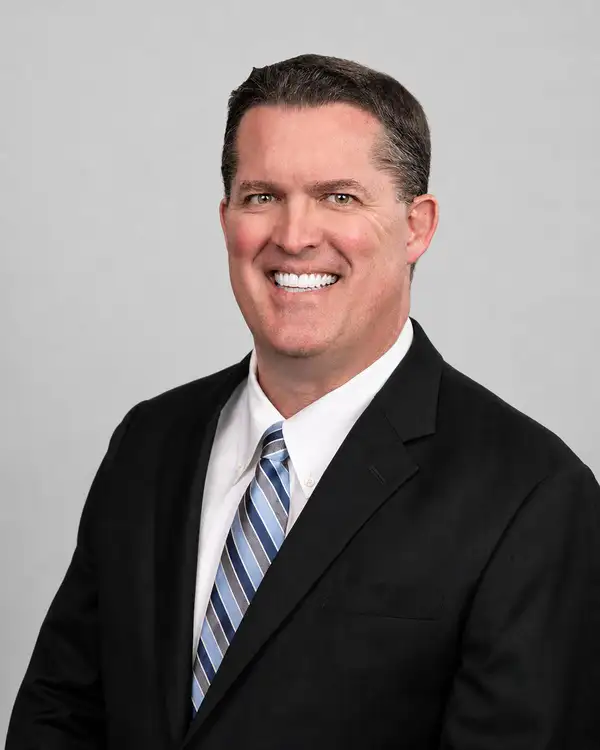
Sam A. Maida, Jr.
Owner and Managing Attorney
Sam A. Maida, Jr. has represented injured Texans in the greater Houston area since the firm opened in 1993.
State Bar of TexasAvvoMartindale-HubbellLawLinkThatCarHitMeLinkedIn

Bernard G. Johnson III
Litigation Managing Attorney
Bernard G. Johnson III is a board certified trial lawyer licensed in Texas since 1996 and a graduate of South Texas College of Law.