The Woodlands Hit and Run Accident Lawyer
Maida Law Firm helps people in The Woodlands who were hurt by a driver who did not stop, from the firm’s Houston office at 8313 Southwest Freeway. If the Montgomery County Sheriff’s Office or a Harris County constable identifies the driver, the claim goes to that driver’s insurer. If no one is ever identified, the money usually comes from your own uninsured motorist coverage, and Texas lets that coverage pay for an unknown driver only when the other vehicle physically struck you or your property.
Call (713) 785-9484 and we will go through the crash report and your policy with you at no cost. You pay no fee unless we recover money for you.
Written and legally reviewedWritten by Sam A. Maida, Jr., Owner and Managing Attorney · Reviewed by Bernard G. Johnson III, Litigation Managing Attorney
Published · Last updated
Who investigates a hit-and-run in The Woodlands, and how are drivers found?
The Woodlands is not a city with its own police department, so a hit-and-run there is usually investigated by the Montgomery County Sheriff’s Office or, on the Harris County side, by a Precinct 4 constable. Your job is to get that agency’s report number to your insurer quickly and to help preserve video and witnesses.
Away from a city, Texas law sends notice of an injury crash to the “sheriff’s office or the nearest office of the department” of Public Safety (Transportation Code § 550.026(a)(3)). The sheriff’s District 6 “primarily patrols The Woodlands Township” (MCSO South Patrol Command), and the township says it pays for extra patrols by both the sheriff and the “Harris County Constable’s Office, Precinct 4” (The Woodlands Township, Law Enforcement). The officer’s card tells you which one has your case:
| Where it happened | Agency |
|---|---|
| Township, Montgomery County side | Sheriff’s Office District 6, 9200 Grogan’s Mill Road |
| Oak Ridge North, Shenandoah, Rayford / Sawdust / I-45 | Sheriff’s Office District 2, Spring Annex |
| Township, Harris County side | Harris County Constable, Precinct 4 |
| Anywhere above | 911; non-emergency (936) 538-5900 |
How two Montgomery County cases were solved
After a hit-and-run in The Woodlands area on 26 September 2022, the sheriff’s office says a deputy updated his report on his day off once the injuries proved worse than first reported, the young driver came forward with her mother, and the case went to the County Attorney “within three days” as a felony charge of failure to stop and render aid (MCSO release, 7 October 2022). In late October 2026, a driver hit the open door of a deputy’s patrol car during a traffic stop on I-45 and drove off; deputies “tracked the car to its registered address” and found damage that matched (FOX 26 Houston, 27 October 2026). In both cases the driver was found through the car or the family, not through a confession at the scene. A charge is an accusation, not a finding of guilt.
What Texas required the driver to do
A driver in a crash that injures or kills someone must “immediately stop”, go back if they did not, find out whether anyone needs help, and stay until they have given their details and provided “reasonable assistance” (§§ 550.021(a), 550.023). Driving away is its own crime, graded by how badly the person was hurt:
| Injury caused | Grade | Punishment range |
|---|---|---|
| Death | Second-degree felony | 2 to 20 years; fine up to $10,000 |
| Serious bodily injury | Third-degree felony | 2 to 10 years; fine up to $10,000 |
| Any other injury | § 550.021(c)(2) | Up to 5 years in prison or 1 year in county jail; fine up to $5,000 |
Ranges from Penal Code chapter 12. The prosecution in Conroe punishes the driver; your medical bills and lost pay are recovered through the civil claim and your insurance.
What helps investigators find the car
Both cases above turned on the vehicle. Note the color, body style, damage, any part of a plate and the direction it went, and keep any broken trim or mirror glass left at the scene. Many shopping centers along Woodlands Parkway, Research Forest Drive and the I-45 frontage roads, and many homes with doorbell cameras, record over old video on a cycle, so ask for footage to be saved straight away.
Who pays when the hit-and-run driver in The Woodlands is never found?
When the driver is identified, their liability insurer is first in line, and your underinsured motorist coverage can pay above their limits. When no driver is ever identified, your own uninsured motorist coverage is usually what pays, but only if the hit-and-run vehicle made actual contact. Because leaving the scene is a crime, Texas crime victims’ compensation is also available.
Your uninsured motorist coverage and the contact rule
Uninsured/underinsured motorist coverage comes with a Texas auto policy unless a named insured “rejects the coverage in writing” (Insurance Code § 1952.101(c), chapter 1952). For a driver nobody can identify, the law requires that “actual physical contact must have occurred between the motor vehicle owned or operated by the unknown person and the person or property of the insured” (§ 1952.104(3)). A pickup that forces you off Gosling Road or into the Kuykendahl median without touching your car usually falls outside that rule, which makes the deputy’s note of contact, the paint transfer and the damage photos central evidence. A pedestrian or cyclist may be covered by a household member’s auto policy, depending on its definition of an insured; we check the policy wording before advising.
If the driver is identified
The minimum Texas liability limit is “$30,000 for bodily injury to or death of one person in one collision” (Transportation Code § 601.072(a-1)). If your losses are larger, underinsured motorist coverage can pay the rest up to your own limit, “reduced by the amount recovered or recoverable from the insurer of the underinsured motor vehicle” (§ 1952.106). If the identified driver carried no insurance, your uninsured motorist coverage still applies.
Texas crime victims’ compensation
Ordinary traffic crashes rarely qualify for crime victims’ compensation, but conduct “in violation of Section 550.021, Transportation Code” is listed (art. 56B.003). The application goes to the Attorney General “not later than the third anniversary” of the crime (art. 56B.052); the cap is that awards “may not exceed $50,000 in the aggregate” (art. 56B.106), with an additional amount of up to $75,000 for a catastrophic injury causing permanent disability. The sheriff’s office runs a victim services unit that can help with the form.
Shared fault, deadlines and where suit is filed
Texas bars recovery when your “percentage of responsibility is greater than 50 percent” and reduces it for any smaller share (Civil Practice and Remedies Code § 33.001). Suit is generally due “not later than two years after the day the cause of action accrues” (§ 16.003); time before a child turns 18 is not counted (§ 16.001). A Montgomery County case is heard in the district courts in Conroe, at the courthouse on West Phillips; a Harris County case goes downtown to the civil courthouse. Your policy also has its own prompt-notice terms for an uninsured motorist claim.
| What happened | Usual source of payment, and the law |
|---|---|
| Driver found, insured | Driver’s liability insurer, then your underinsured coverage (Transp. Code § 601.072; Ins. Code § 1952.106) |
| Driver found, uninsured | Your uninsured motorist coverage (Ins. Code § 1952.101) |
| Driver never found, vehicle hit you | Your uninsured motorist coverage (Ins. Code § 1952.104(3)) |
| Driver never found, no contact | Usually not uninsured motorist coverage (Ins. Code § 1952.104(3)) |
| Injured by a driver who fled | Crime victims’ compensation, up to $50,000 (Code Crim. Proc. arts. 56B.003, 56B.106) |
What should you do in the days after a hit-and-run in The Woodlands?
Call 911, get checked by a doctor, keep the report number, notify your own insurer promptly, and ask nearby businesses and neighbors to save their video.
- Record the vehicle. Color, type, damage, partial plate and which way it went, written down the same day.
- Keep the officer’s card. It shows whether MCSO District 6, District 2 or a Precinct 4 constable has the case.
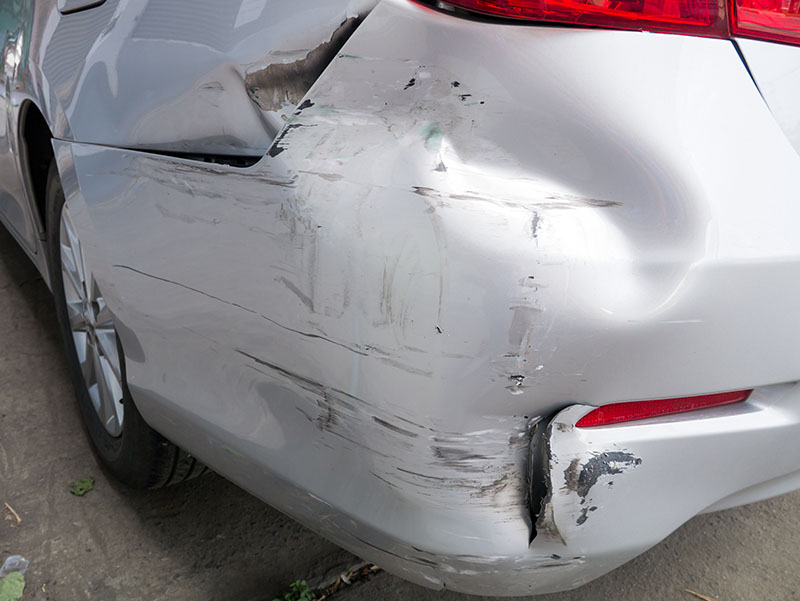
- Photograph the contact. Dents, scrapes and paint transfer on your car, bike or clothing support the contact rule.
- Ask for footage. Stores, apartment complexes and doorbell cameras near the scene; ask them to save it now.
- Hold off on recorded statements to any insurer, your own included, until you know what your policy covers.
Related pages: hit-and-run claims in Houston, failure-to-stop crashes, car crash claims in The Woodlands, pedestrians struck in The Woodlands, cyclists struck in The Woodlands and the Woodlands personal injury overview.
The Woodlands hit and run accident questions
In many cases, yes. Your own uninsured motorist coverage can pay for an unidentified driver when that vehicle actually touched you or your property, as long as no named insured signed a written rejection of it (§ 1952.101(c)). Crime victims’ compensation may also cover medical costs and lost income.
Usually the Montgomery County Sheriff’s Office: District 6 patrols the township and District 2 covers the surrounding area. In the Harris County part of the township it may be the Harris County Constable’s Office, Precinct 4. The report number on the officer’s card shows which agency has it.
Usually not while nobody knows who the driver was. For an unknown driver, the statute pays only when that vehicle physically struck you, your car or your bike (§ 1952.104(3)). Once a witness or a camera puts a name to the driver, the claim can be made against them.
Very likely. Texas insurers must offer it in or with every auto liability policy, and it stays unless a named insured rejected it in writing (Insurance Code § 1952.101(b)-(c)). Your declarations page lists the limits; we can read it with you.
No. The criminal case and your injury claim are separate, and the two-year filing period for your claim keeps running while the prosecution goes on. The arrest records and the vehicle evidence often help prove the civil claim.
Check the auto policies of the relatives you live with: many treat household members as insureds, but the wording varies. Even with no policy at all, the state crime victims’ fund is open to you, because driving away from an injury crash is a crime.
Three clocks run at once. The lawsuit deadline is generally two years (§ 16.003). The crime victims’ fund application is due by the third anniversary (art. 56B.052). The tightest is usually your own policy, which asks for prompt notice of an uninsured motorist claim, so call your insurer within days, not months.
Hurt by a driver who left the scene in The Woodlands?
Talk with Maida Law Firm about the sheriff’s report, the video, your own coverage and the deadlines. The first conversation costs nothing, and we are paid only out of a recovery. Call (713) 785-9484 and keep the officer’s card and your damage photos.
About the authors

Sam A. Maida, Jr.
Owner and Managing Attorney
Sam A. Maida, Jr. has represented injured Texans in the greater Houston area since the firm opened in 1993.
Texas Bar No. 00787950
State Bar of TexasAvvoMartindale-HubbellLawLinkThatCarHitMeLinkedIn

Bernard G. Johnson III
Litigation Managing Attorney
Bernard G. Johnson III is a board certified trial lawyer licensed in Texas since 1996 and a graduate of South Texas College of Law.
Texas Bar No. 00796832
Admitted to practice in the U.S. District Court for the Western District of Texas (2004)
Video: Maida Law Firm: Personal Injury Lawyers in Houston, TX
An introduction to Maida Law Firm, the Houston personal injury firm Sam A. Maida, Jr. founded in 1993. Watch on YouTube