
Sugar Land Hit and Run Accident Lawyer
Maida Law Firm represents people injured by drivers who fled the scene in Sugar Land, from the firm’s Sugar Land office at 19901 Southwest Freeway, Ste 310. A driver who leaves a crash that hurts someone commits a crime under Transportation Code § 550.021, but the criminal case pays you nothing. Your money usually comes from that driver’s insurer once they are identified, or from your own uninsured motorist coverage if they never are, and for an unknown driver Texas requires that the policy pays only if that vehicle made physical contact with you or something you own (Insurance Code § 1952.104(3)).
The first conversation is free, and any fee is paid only out of a recovery. Call 281-949-7119.
Written and legally reviewedWritten by Sam A. Maida, Jr., Owner and Managing Attorney · Reviewed by Bernard G. Johnson III, Litigation Managing Attorney
Published · Last updated
How are hit-and-run drivers found in Sugar Land, and what should you do first?
Most Sugar Land hit-and-run drivers who are caught are traced through video and the damage to their car, not through the victim’s memory alone. Report the crash at once to the agency that covers the spot, get medical care, then write down every detail of the vehicle and ask nearby businesses to keep their camera recordings before they are overwritten.
How a Sugar Land case was solved
On the night of 20 December 2021, Austin Reese, 37, was walking on the northbound feeder road of U.S. Highway 59 near South Parkway when a light-colored 2003–2004 Pontiac Vibe struck him and drove off; he died at the scene. Video from a nearby gas station showed the car pulling through its parking lot shortly after the crash (ABC13, 24 December 2021), and police asked anyone with information to call Fort Bend County Crime Stoppers at (281) 342-TIPS (KPRC 2, 23 December 2021). Officers found the car four days later at an apartment complex in Rosenberg. The driver was arrested and charged on 4 January 2022, prosecuted by the Fort Bend County District Attorney’s Office, and in October 2023 was sentenced to 20 years in prison for failure to stop and render aid causing death (KPRC 2, 18 October 2023), the top of the range for a second-degree felony (Penal Code § 12.33).
What Texas law required of the driver who left
When a crash “results or is reasonably likely to result in injury to or death of a person”, the driver must immediately stop, or immediately return, and remain until they have checked whether anyone needs help (§ 550.021(a)). Section 550.023 then requires them to give their name, address and registration number and “the name of the operator’s motor vehicle liability insurer”, and to provide “reasonable assistance”, including arranging a ride to a doctor or hospital (§ 550.023). A driver who does none of this has broken the law even if they had no part in causing the crash itself.
| What the crash caused | Grade of offense | Range of punishment |
|---|---|---|
| Death | Second-degree felony | 2 to 20 years in prison; fine up to $10,000 |
| Serious bodily injury | Third-degree felony | 2 to 10 years in prison; fine up to $10,000 |
| Other injury | § 550.021(c)(2) | Prison for no more than 5 years or county jail for no more than 1 year, and/or a fine of no more than $5,000 |
Who to call, and where the report comes from
Texas directs the notice of an injury crash, “by the quickest means of communication”, to the local police department when it happens inside a city, and otherwise to the sheriff’s office or the nearest Department of Public Safety office (§ 550.026(a)). In practice: Sugar Land Police inside the city limits, and the Fort Bend County Sheriff or DPS on a stretch outside them. Call 911 either way. The investigating officer must file a written report “not later than the 10th day after the date of the collision” (§ 550.062(b)). Sugar Land Police send people to TxDOT’s Crash Records Information System to buy the report; other police records go through an open-records request to the City Secretary’s Office, 2700 Town Center Blvd., (281) 275-2730 (City of Sugar Land, Police Department FAQ, read 20 November 2026).
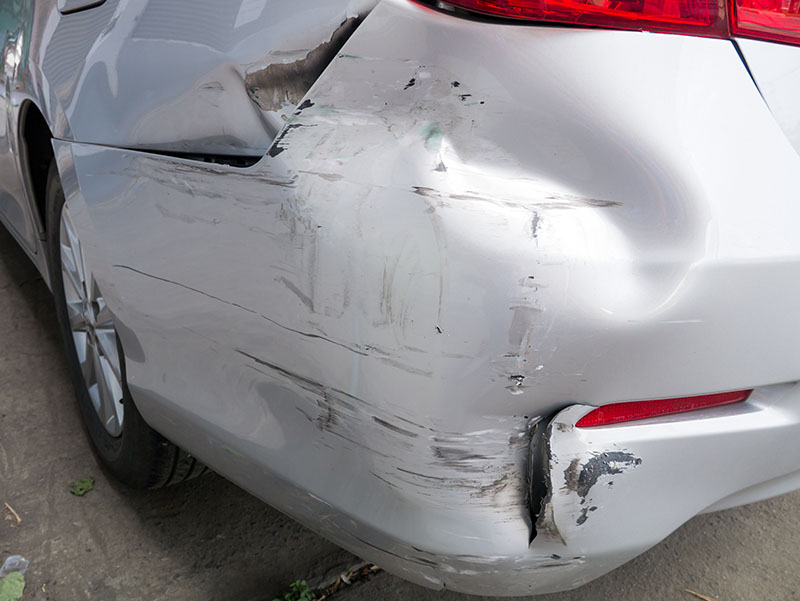
Keep what identifies the car: color, make, body style, any letters of the plate, the direction it went and where it was damaged. Photograph debris and paint marks on your own vehicle. Along Highway 6, the Southwest Freeway feeder roads and the shopping centers off them, many businesses run cameras that record over themselves, so ask early and give the officer the names of the places you asked.
Who pays a Sugar Land hit-and-run victim when the driver is never identified?
If the driver is identified, the claim runs against that driver and their liability insurer. If the driver is never found, the usual sources are your own uninsured motorist coverage, which applies only where the unknown vehicle actually touched you or your property, and the Texas Crime Victims’ Compensation fund, which expressly covers people hurt by a driver who failed to stop and render aid.
Your own policy: uninsured motorist coverage
Every Texas auto liability policy must include uninsured/underinsured motorist coverage, which “does not apply if any insured named in the insurance policy rejects the coverage in writing” (Insurance Code § 1952.101). When the at-fault driver is unknown, the policy must require that “actual physical contact must have occurred between the motor vehicle owned or operated by the unknown person and the person or property of the insured” (§ 1952.104(3)). A car that sideswipes you on the Southwest Freeway and speeds off meets that test; a car that cuts you off and sends you into a ditch without touching you may not, unless a witness or video identifies it. Paint transfer and crush damage are the proof of contact, so have the vehicle photographed and inspected before it is repaired.
The minimum limits are $30,000 per person injured, $60,000 for each crash and $25,000 for property damage (Transportation Code § 601.072(a-1)), and the property-damage part of uninsured motorist coverage is “subject to a deductible amount of $250” (§ 1952.105(b)). Many households carry more, and a relative’s policy in the same household can also apply, so the declarations pages are worth pulling early.
The Texas Crime Victims’ Compensation fund
Most car crashes fall outside this fund, but its definition of criminally injurious conduct includes conduct “in violation of Section 550.021, Transportation Code” (Code of Criminal Procedure art. 56B.003). The crime has to be reported to police within a reasonable period (art. 56B.053), the application is due “not later than the third anniversary” of the crash (art. 56B.052), and awards for one victim “may not exceed $50,000 in the aggregate”, with up to $75,000 more where the injury is catastrophic and permanently disabling (art. 56B.106). What insurance pays can reduce the award, so the fund is usually the last source, not the first.
| Source | When it applies (authority) |
|---|---|
| The fleeing driver’s liability insurer | Driver identified and insured; minimum $30,000 per injured person (Transp. Code § 601.072) |
| Uninsured motorist (UM) coverage on your policy | Driver unknown and their vehicle struck you or your property, or driver found but uninsured (Ins. Code §§ 1952.101, 1952.104) |
| Underinsured motorist (UIM) coverage on your policy | Driver found, but their limits are too low for your losses (Ins. Code § 1952.106) |
| Crime Victims’ Compensation | Injury or death from a failure to stop and render aid, reported to police; apply within three years (Code Crim. Proc. arts. 56B.003, 56B.052) |
Deadlines, fault and where the case is heard
An injury lawsuit must be filed “not later than two years after the day the cause of action accrues”, and a wrongful-death claim runs from the date of death (Civil Practice and Remedies Code § 16.003). Under Texas proportionate responsibility a person found more than 50 percent responsible recovers nothing (§ 33.001); a driver who fled is rarely there to argue that you were. Your own policy may set much shorter notice terms, so tell your insurer about the crash right away and keep a copy. A Sugar Land injury suit is normally filed in Fort Bend County, whose district courts sit at the Justice Center, 1422 Eugene Heimann Circle, Richmond (Fort Bend County District Courts). The civil claim does not wait for an arrest or a criminal verdict.
Related pages: the firm’s main hit-and-run page, failure to stop and failure to yield, Sugar Land pedestrian accident claims, Sugar Land car accident claims and the Sugar Land personal injury overview.
Sugar Land hit-and-run questions
It depends on the harm. Under Transportation Code § 550.021(c), leaving a crash that kills someone is a second-degree felony (2 to 20 years in prison), and leaving one that causes serious bodily injury is a third-degree felony (2 to 10 years). Any other injury carries up to five years in prison or one year in county jail, a fine of no more than $5,000, or both. In a December 2021 Sugar Land case, the driver received 20 years.
Usually. Your own uninsured motorist coverage applies unless someone named on the policy turned it down in writing (Insurance Code § 1952.101), but for an unknown driver the vehicle must have physically struck you or your property (§ 1952.104(3)). When someone was injured, the Texas Crime Victims’ Compensation fund is a second source; the application is due within three years.
For an uninsured motorist claim against an unidentified driver, yes: the statute’s words are “actual physical contact” between the unknown vehicle and the insured person or property. If a witness, a plate number or camera footage identifies the driver, the claim goes against that driver directly and the contact rule does not apply.
Sugar Land Police inside the city limits; outside them, the Fort Bend County Sheriff or DPS (Transportation Code § 550.026(a)). Call 911 from the scene. Tips about a driver who fled can go to Fort Bend County Crime Stoppers at (281) 342-TIPS, the number police gave in the 2021 Highway 59 case.
Sugar Land Police direct people to buy crash reports through TxDOT’s Crash Records Information System online. Other police records are requested from the City Secretary’s Office, 2700 Town Center Blvd., (281) 275-2730. The officer has ten days after the crash to file the report (Transportation Code § 550.062(b)).
Two years to file an injury or wrongful-death lawsuit in most cases (Civil Practice and Remedies Code § 16.003), and three years to apply for Crime Victims’ Compensation (Code of Criminal Procedure art. 56B.052). Insurance policies often require notice within days, so report the crash to your insurer promptly.
A driver hit you in Sugar Land and kept going? Talk to us
Tell us where it happened and what you saw of the car. We will read your policy, check whether the contact rule and the Crime Victims’ Compensation fund apply, and work on finding the driver while the video still exists. No fee unless we recover for you: 281-949-7119.
About the authors

Sam A. Maida, Jr.
Owner and Managing Attorney
Sam A. Maida, Jr. has represented injured Texans in the greater Houston area since the firm opened in 1993.
Texas Bar No. 00787950
State Bar of TexasAvvoMartindale-HubbellLawLinkThatCarHitMeLinkedIn

Bernard G. Johnson III
Litigation Managing Attorney
Bernard G. Johnson III is a board certified trial lawyer licensed in Texas since 1996 and a graduate of South Texas College of Law.
Texas Bar No. 00796832
Admitted to practice in the U.S. District Court for the Western District of Texas (2004)
Video: Maida Law Firm: Personal Injury Lawyers in Houston, TX
An introduction to Maida Law Firm, the Houston personal injury firm Sam A. Maida, Jr. founded in 1993. Watch on YouTube