
Sugar Land Uber & Lyft Accident Lawyer
Maida Law Firm represents people hurt in Uber and Lyft crashes in Sugar Land, Texas — passengers, rideshare drivers, and the other motorists, cyclists and pedestrians they hit — from our Sugar Land office at 19901 Southwest Freeway, Ste 310. The first fact we establish is what the driver’s app was doing at impact, because Texas ties the minimum insurance to it.
During an accepted trip the policy must carry a $1 million total limit per incident (Tex. Ins. Code § 1954.053, read November 13, 2026). Sugar Land also has its own app-booked shared ride, Sugar Land On-Demand, which is not an Uber or Lyft trip. Call 281-949-7119 for a free consultation; our fee comes only out of a recovery.
Written and legally reviewedWritten by Sam A. Maida, Jr., Owner and Managing Attorney · Reviewed by Bernard G. Johnson III, Litigation Managing Attorney
Published · Last updated
Was it an Uber or Lyft, or a Sugar Land On-Demand ride, and why does it matter?
It decides which insurance rules you start from. An Uber or Lyft driver uses a personal car, and Texas Insurance Code chapter 1954 sets the minimum coverage by app phase. Sugar Land On-Demand is a city-sponsored service run by a contractor with its own fleet, so its contract and policy, not the rideshare phases, are the place to begin.
The rideshare rules turn on a personal vehicle. Chapter 1954 defines a transportation network company driver as someone who gives a prearranged ride in a personal vehicle — one the driver owns, leases or is otherwise authorized to use, and not a taxicab, limousine or similar for-hire vehicle (§ 1954.001(2), (5); Insurance Code ch. 1954, read November 13, 2026). Every Uber and Lyft claim in Sugar Land runs through those definitions.
Sugar Land On-Demand is different. The City of Sugar Land partnered with Via Transportation to run Sugar Land On-Demand, booked through its own app or by phone at 346-615-5786, with each trip limited to 6 miles (City of Sugar Land, Microtransit Pilot Project, read November 13, 2026). City Council approved a contract with River North Transit LLC on March 4, 2025; service began March 18, 2025 with seven vehicles — electric sedans and hybrid wheelchair-accessible minivans — at $2 a trip (Community Impact, March 6, 2025). By early 2026 it had completed 34,285 trips, and council renewed River North Transit as the operator through March 17, 2027 (Community Impact, March 6, 2026). Its zone takes in Sugar Land Regional Airport, Smart Financial Centre, Constellation Field, First Colony Mall, Methodist Sugar Land and St. Luke’s hospitals and UH Sugar Land.
| Ride | Who runs it | Whose vehicle | Where a claim starts |
|---|---|---|---|
| Uber or Lyft | A transportation network company and an independent-contractor driver | The driver’s own car | The phase the app was in: Insurance Code chapter 1954 sets the minimum policy for each |
| Sugar Land On-Demand | City of Sugar Land program; vehicles operated by contractor River North Transit LLC, booked through a Via app | A dedicated fleet of electric sedans and hybrid wheelchair-accessible minivans | The operator’s contract and insurance, and whether rules for public bodies reach the ride; reviewed case by case |
| Fort Bend Transit demand response | Fort Bend County Public Transportation | County vans | Tort Claims Act rules for a county: written notice generally within six months, damages capped |
Sources: City of Sugar Land, Microtransit Pilot Project; Community Impact, March 6, 2025 and March 6, 2026; Insurance Code ch. 1954; CPRC ch. 101; read November 13, 2026.
Why we do not assume. Whether the rideshare chapter, or the Tort Claims Act rules for a city (CPRC §§ 101.023(c), 101.101), reach a crash in a city-sponsored car driven by a contractor’s employee is a question we answer from the contract and the facts. Because the Act’s notice period is six months and a city charter can shorten it, the cautious course is written notice to the City early, while the operator’s insurer is identified.
What must a rideshare driver tell you after a Sugar Land crash, and who keeps the trip record?
On request, the driver must show proof of the rideshare insurance and say whether they were logged on, on the way to a pickup, or carrying a rider at the time. The company must keep each ride record for at least five years, and that record — not the City of Sugar Land — is the evidence of the phase.
At the scene. Section 1954.056(b) requires a rideshare driver to carry proof of the coverage and, after a collision, to give it to a directly interested person, an insurer and the investigating officer on request — and to disclose whether they were logged on, engaged in a prearranged ride, or neither (Ins. Code § 1954.056). The company’s policy is not contingent on the driver’s personal insurer first denying the claim (§ 1954.055). Anyone injured, or a car that cannot be driven safely, means the crash must be reported at once to Sugar Land police (Transp. Code § 550.026(a)).
Why the city has no driver file. Texas made rideshare regulation an exclusive state power; a city may not require its own license or permit for rideshare drivers (§ 2402.003, Occupations Code ch. 2402, read November 13, 2026). Records a rideshare company gives a public body are also exempt from the Public Information Act (§ 2402.152(a)). The trip data sits with Uber or Lyft, which must keep individual ride records for at least five years (§ 2402.151(a)(2)), so our preservation request goes to the company, and a screenshot of your own trip receipt is the best record you control.
The police report and the court. Sugar Land police direct people to TxDOT’s Crash Records Information System for crash reports, and to the City Secretary, 2700 Town Center Blvd. North, 281-275-2730, for other records (City of Sugar Land, Police FAQ). TxDOT counted 2,219 crashes inside Sugar Land city limits in 2025, 11 of them fatal (TxDOT, Crashes and Injuries by City and Town, 2025). A lawsuit over a crash in the city normally goes to a Fort Bend County district court at the Justice Center, 1422 Eugene Heimann Circle, Richmond (Fort Bend County, District Courts). For the full phase-by-phase coverage rules, see our Houston Uber and Lyft accident page.
Sugar Land Uber & Lyft Accident Lawyer FAQs
You pay no fee at the start. Maida Law Firm takes Sugar Land rideshare injury cases on a contingency fee: an agreed percentage of any recovery, set out in writing before we start, and no fee if there is no recovery. The first consultation costs nothing.
If the Uber driver caused it while carrying you, the rideshare policy with its $1 million per-incident minimum is the main source (§ 1954.053). If another driver caused it, that driver’s insurer pays first, and the rideshare policy’s uninsured or underinsured motorist coverage may add to it (Ins. Code ch. 1954).
Not by assumption. The $1 million rule in § 1954.053 is written for a rideshare driver in a personal vehicle, and Sugar Land On-Demand runs a dedicated fleet through a city contractor, River North Transit LLC. We obtain the operator’s policy and contract before telling you what coverage applies.
Yes. The firm’s Sugar Land office is at 19901 Southwest Freeway, Ste 310, Sugar Land, TX 77479, 281-949-7119. A rider still recovering can talk with us by phone or video instead.
Yes, against the at-fault driver and their insurer. Texas treats a rideshare driver as an independent contractor when the conditions of Occupations Code § 2402.114 are met, which usually rules out workers’ compensation from the company, so the other driver’s policy and your own coverage carry the claim.
Generally two years from the crash for an injury claim, and two years from the death for a wrongful death claim (CPRC § 16.003). If a city, county or other public body may be responsible, written notice is often due within six months (§ 101.101).
Texas reduces your recovery by your share of fault and bars it only if your share is greater than 50 percent (CPRC § 33.001). A passenger rarely carries any share; for a driver or pedestrian, the trip data, video and the police report decide the argument.
Usually in a Fort Bend County district court in Richmond, because the crash happened in the county. A crash on a trip that ended in Houston may belong in Harris County instead; venue is decided case by case.
Hurt in an Uber, Lyft or On-Demand Ride in Sugar Land?
Tell us the date, the place and which app you used. We identify the policy that applies, ask the company to keep the trip record, and keep every deadline. Free consultation: 281-949-7119.
About the authors
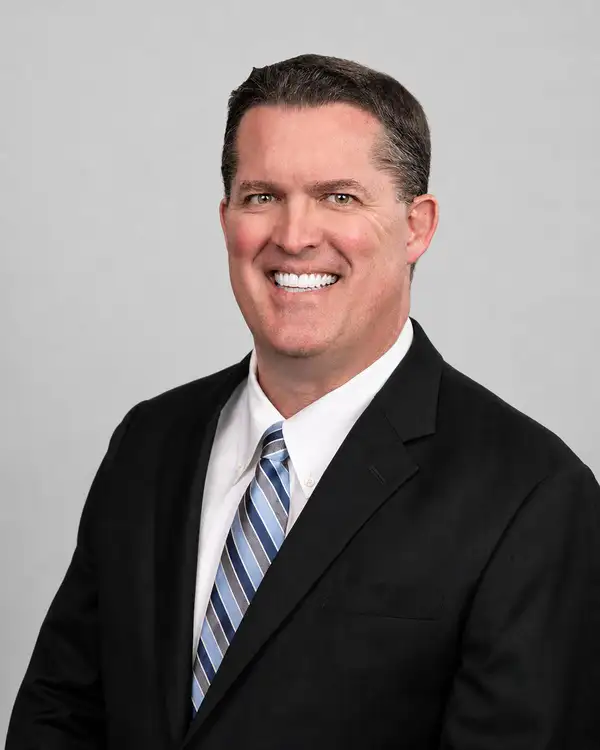
Sam A. Maida, Jr.
Owner and Managing Attorney
Sam A. Maida, Jr. has represented injured Texans in the greater Houston area since the firm opened in 1993.
Texas Bar No. 00787950
State Bar of TexasAvvoMartindale-HubbellLawLinkThatCarHitMeLinkedIn

Bernard G. Johnson III
Litigation Managing Attorney
Bernard G. Johnson III is a board certified trial lawyer licensed in Texas since 1996 and a graduate of South Texas College of Law.
Texas Bar No. 00796832
Admitted to practice in the U.S. District Court for the Western District of Texas (2004)